In this ARTICLE, I’m going through each chapter of Ian Fleming’s Moonraker, looking at what I enjoy about each one and comparing the novel with the 1973 film adaptation.
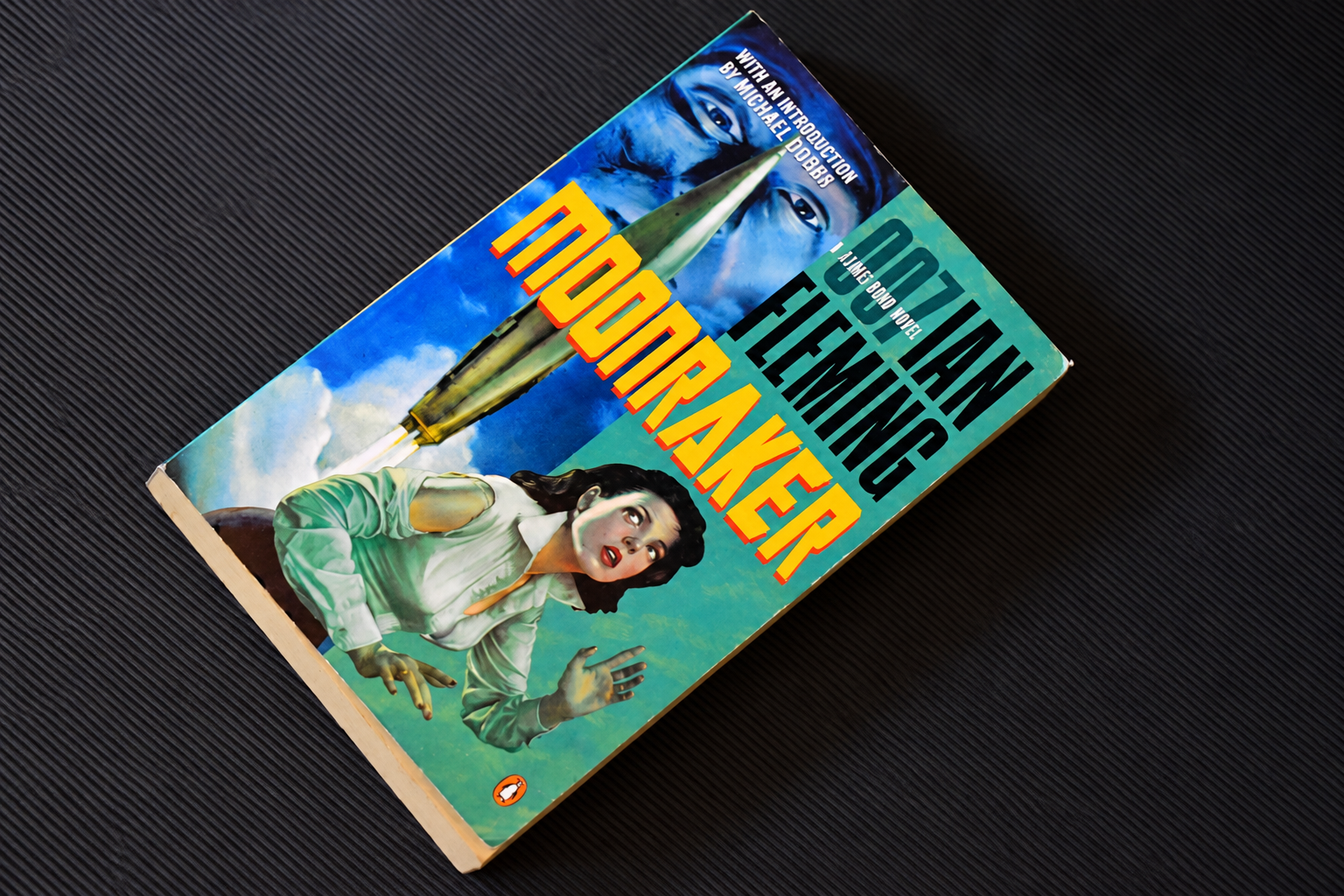
Ian Fleming’s Moonraker
Chapter 1
The novel opens with Bond at the shooting gallery in the basement of MI6 before returning to the eighth floor of the headquarters overlooking Regent’s Park. There is an immediate sense of Bond’s routine and the institutional world he inhabits.
Fleming also gives Bond an extended description of the card game, establishing gambling as an important part of Bond’s character and setting up the central confrontation that is about to come.

Chapter 2
This chapter provides the backstory of Sir Hugo Drax and is packed with exposition, but Fleming makes it feel convincing because he continually grounds the story in the real world.
We learn about Drax’s supposed wartime history, including the story of his badly damaged face, his amnesia and the various heroic accounts surrounding his past. His fortune has supposedly been made through the acquisition of columbite, a mineral needed for jet engines, from Nigerian mines.
There are numerous references to real places and institutions, including the Albert Hall and Blades. Fleming’s technique is particularly effective here because the fictional Drax is surrounded by genuine locations, newspapers, institutions and political figures.
The effect is to make the extraordinary story of the Moonraker feel as though it could genuinely be happening alongside contemporary British life.
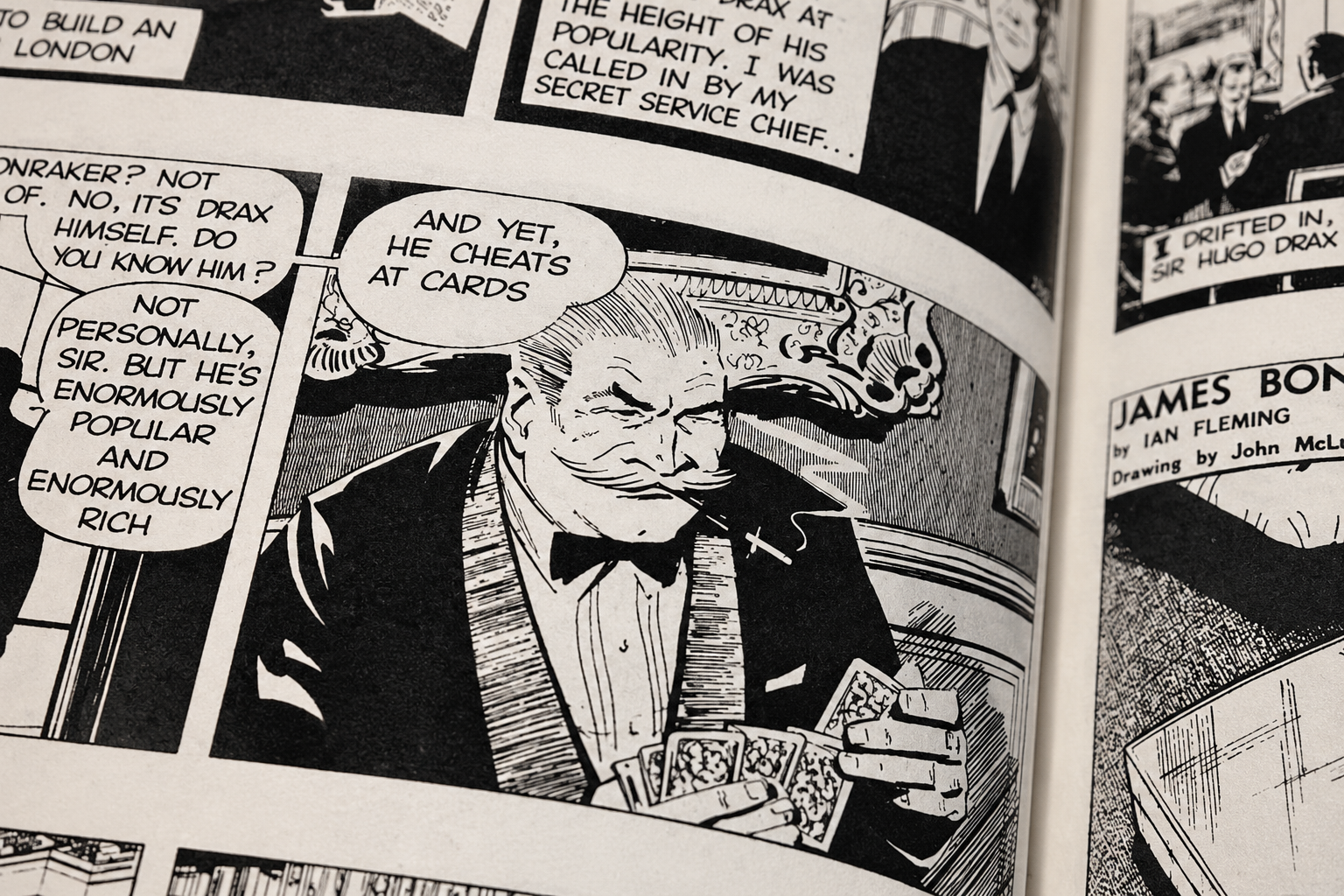
M also establishes an important piece of information: Drax cheats at cards.
Chapter 3
Bond and M discuss Drax’s cheating, which leads Bond to reflect on his previous training as a card sharp. M had sent him to Monte Carlo specifically to learn the techniques of professional gamblers.
There is some lovely everyday Bond material in this chapter. He eats lunch in the canteen with a carafe of Bordeaux before driving from Baker Street to his home.
Fleming then gives us an unusually detailed look at Bond preparing his clothes for his meeting at Blades. Bond actually looks forward to going there, and the description of his wardrobe reinforces how much attention he pays to appearances.
Blades itself is wonderfully detailed. Fleming mentions Floris, Ladbrokes, Wimbledon and other elements of the club’s world, while establishing that it has around 200 members. The strict criteria for membership are part of the appeal: Fleming is creating an exclusive world that Bond understands instinctively.
Chapter 4
Bond arrives at Blades and orders a martini. M dismisses the drink as “rot gut”, reinforcing the difference between Bond’s preferences and M’s.
Then comes the great introduction of Drax. Bond finally introduces himself with the immortal line:
“Bond, James Bond.”
Fleming’s physical description of Drax is extraordinary. Rather than simply telling us that he is ugly or intimidating, he accumulates dozens of peculiar details: his face, fingers, mannerisms and even the strange suggestion that he sucks his thumb.
The result is a grotesque portrait of a man who looks almost physically wrong.
The card game is also given a wider significance. Britain desperately needs Drax to succeed with the Moonraker because the rocket is regarded as an essential part of the country’s defence. That creates the central dilemma: Britain needs Drax even though Bond increasingly suspects that something is wrong with him.
Bond’s alternative is to beat Drax at his own game — effectively bankrupting him with his own money.
Chapter 5
Bond and M sit in the dining room at Blades and Fleming gives us another wonderful piece of food-and-wine detail.
M knows exactly what he wants. He orders half a bottle of claret while Bond orders salmon, which Fleming establishes as one of Bond’s particular food fixations. Bond wants champagne and remembers that he likes Taittinger, although Blades does not have any. The waiter, Grimm, offers a bottle of Dom Pérignon that has been kept on ice for the chairman.
This is the first mention of Dom Pérignon in the novel.
Bond takes Benzedrine before returning to the gambling room. Fleming then describes the room itself — its paintings, chandeliers, jewellery, silver and gold — but, more importantly, describes the psychological effect of the room on the people inside it.
The surroundings aren’t merely decorative. The luxury, artificiality and atmosphere influence the behaviour of everyone playing. This is one of Fleming’s strengths: using physical surroundings to reveal character.

Chapter 6
Bond goes head-to-head with Drax and initially finds himself with bad cards.
Drax’s arrogance is already becoming unbearable. What makes him so unlikeable isn’t simply the fact that he is cheating; it is the way he behaves towards everyone around him. He boasts constantly and treats other people with contempt.
Bond, meanwhile, becomes increasingly caught up in the game. The champagne and Benzedrine are beginning to affect him, and the encounter becomes a genuine clash of egos.
Whatever respect Bond may have had for Drax when discussing him with M is rapidly disappearing. Sitting opposite him at the card table, Bond sees the unpleasantness underneath the public image.
The game becomes personal. Bond doesn’t merely want to win the money — he wants to beat Drax. In the celluloid Moonraker we don’t see any of the card game. In fact the only sport we see where they get to flex their competitive biceps is when Drax asks Bond to take a turn in game shooting.
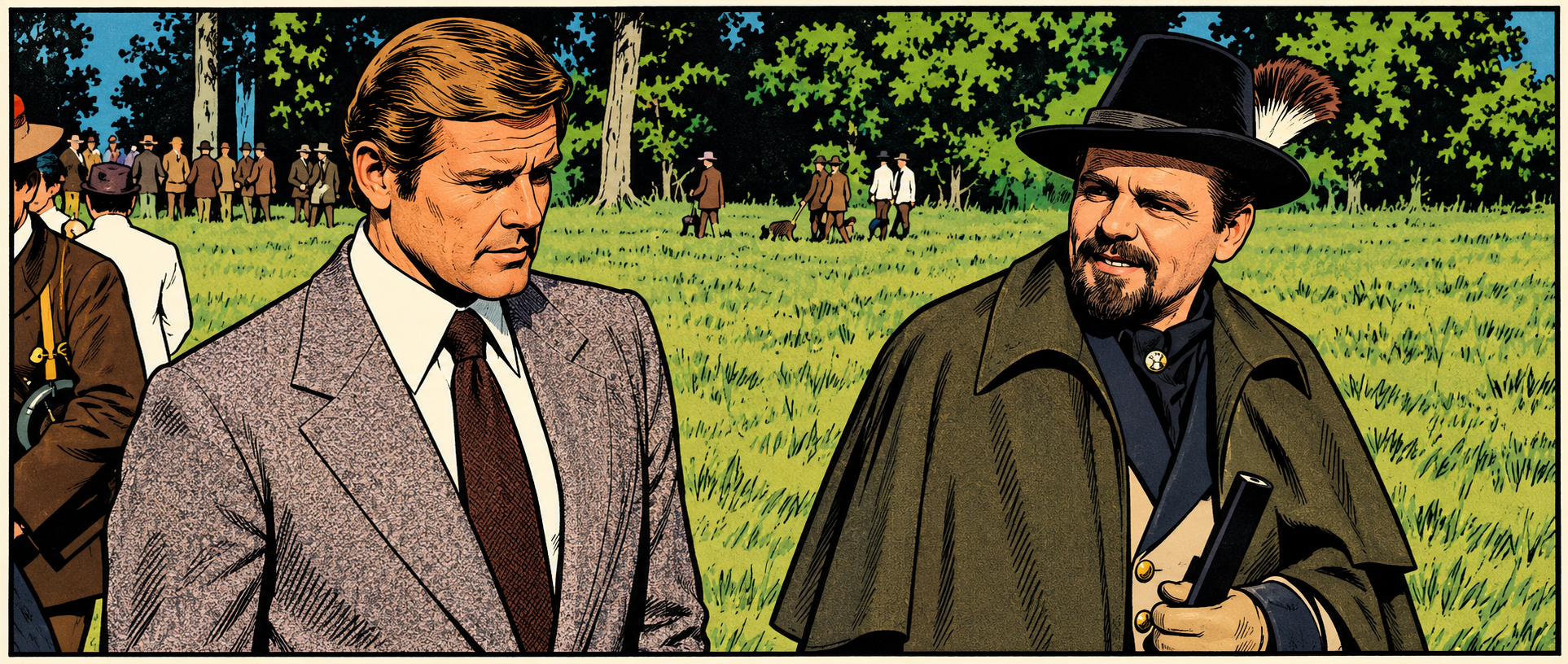
Bond and Drax out shooting in the film Moonraker. Such a good sport.
Chapter 7
The confrontation reaches its climax as Bond gets the upper hand.
The card-playing explanations are extremely detailed, but interestingly, you don’t necessarily need to understand every technical detail. Fleming makes the game work through the reactions of the players.
One particularly effective moment is the reaction of the chairman, who drops his whisky glass when he realises what Bond is doing. Everyone begins positioning themselves so they can see Drax’s reaction.
Drax’s treatment of his companions makes him even more repulsive. He humiliates people and behaves towards them with the casual cruelty of someone who regards everyone else as inferior.
When Drax finally loses, he tells Bond:
“Spend the money quickly, Mr Bond.”
Bond responds:
“I intend to.”
Octopussy also leaned into this dialogue after Bond beats the cheating Kamal Khan at Backgammon. It is a wonderful Bond victory because the reader desperately wants him to win. Drax has become so unpleasant that the satisfaction isn’t simply that Bond has outplayed a cheat — it is that he has humiliated someone who deserves it.
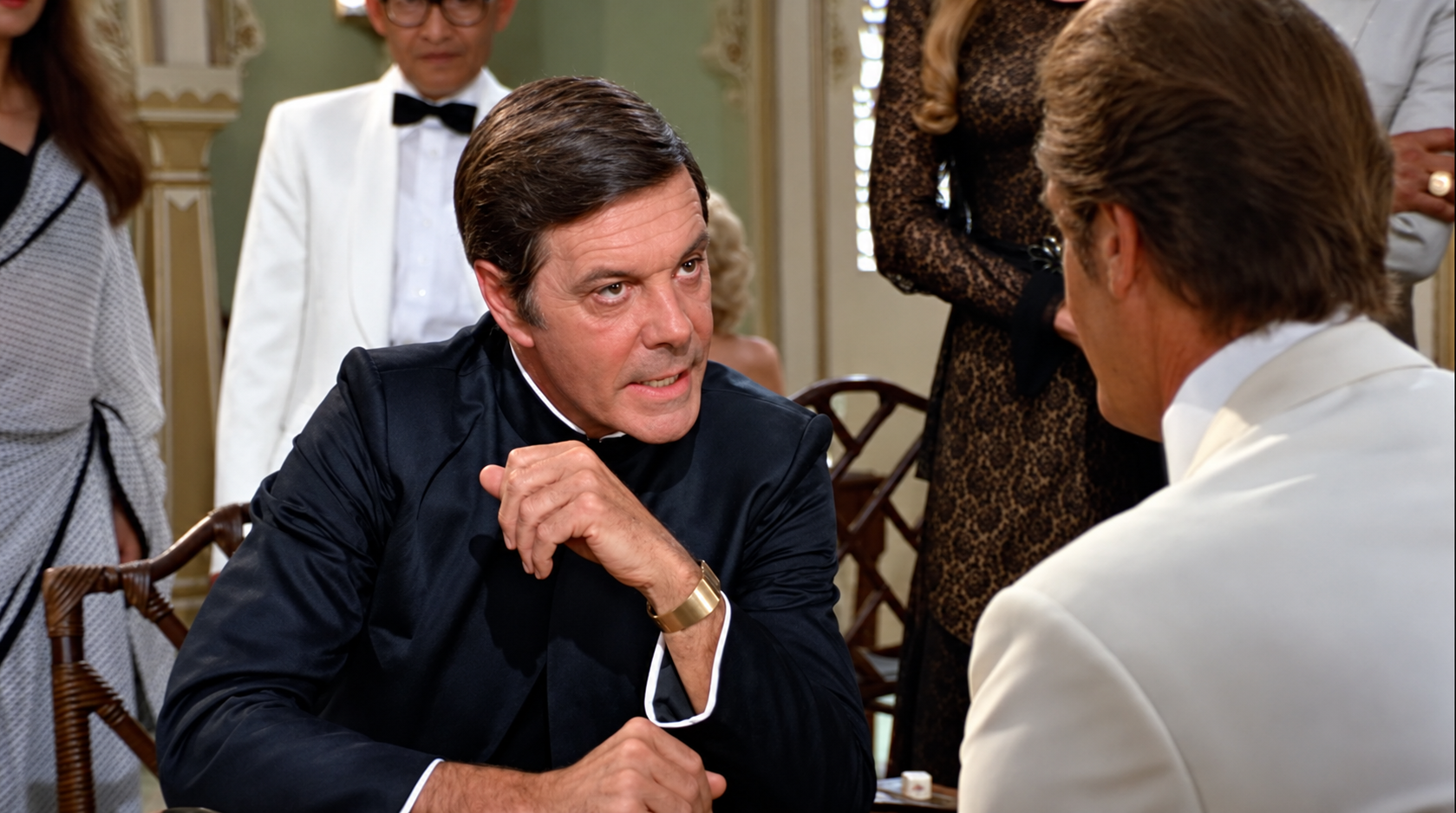
‘Spend the money quickly Mr Bond’ Kamal Khan in 1983 Octopussy
Chapter 8
Bond meets with M and Basildon, and the mechanics of Drax’s cheating are revealed, including the ingenious card switch involving a handkerchief.
There is an amusing parallel here with Fleming’s other stories involving sleight-of-hand and switching objects, although this is very different from the Fabergé egg trick in Octopussy.
Bond is also suffering badly from his excesses of the previous evening.
One of the strangest passages follows: Bond starts reading a file about a Japanese drug. Fleming gives the reader a huge amount of information, only for Bond himself to stop and essentially wonder why he is reading it.
It is almost as though Fleming and Bond are sharing the same thought:
Why am I being told this?
It is an interesting moment because Fleming allows the reader to recognise the mechanics of exposition rather than pretending that every piece of information is immediately important.
Bond then thinks about Drax’s psychology. Why does he cheat? Bond reasons that Drax sees ordinary human beings as beneath him and therefore cannot tolerate the idea of losing to them.
Fleming compares this compulsive behaviour to other forms of obsession — a sex maniac needing sex, a kleptomaniac needing to steal, and so on.
Bond also considers how he might spend his £15,000 winnings: a new Bentley, clothes, golf equipment and improvements to his flat. Then M summons him.
Chapter 9
M tells Bond that there has been a double murder at Drax’s Moonraker facility. Fleming provides another substantial piece of backstory, explaining why German workers had been employed at the project.
We are also introduced to Gala Brand, a member of the British intelligence services. Her involvement raises questions because this is apparently a domestic murder case that should fall under Scotland Yard or MI5 rather than the Secret Service.
However, the Moonraker is due to launch in only four days, transforming what might otherwise be an ordinary criminal investigation into a matter of national security. The urgency of the rocket launch explains why Bond has been sent in.
Chapter 10
Bond visits Professor Train, a physics specialist, who explains the Moonraker to him. This is another heavily technical chapter, but Fleming has a clever reason for presenting the information this way. Bond asks the straightforward questions that the ordinary reader would ask: How does it work? What does it do?
Bond’s relative lack of technical knowledge allows Fleming to explain the rocket in layman’s terms without making the exposition feel entirely artificial.
Bond then drives through Kent while recalling the information, so the story is simultaneously moving physically and mentally. Eventually he reaches the pub where the shooting occurred. The landlord describes the incident, including the strange behaviour of the man before he shot himself.
Bond becomes suspicious of the man’s choice of drink — black-and-white whisky — and Fleming again manages to turn a tiny detail into something potentially significant.

To find Ian Fleming’s Moonraker locations in Britain and Kent you’ll find plenty in Edward Biddulph’s book, The James Bond Lover’s Guide to Britain
Chapter 11
Drax gives Bond a tour of the Moonraker facility. Interestingly, Bond begins to admire Drax’s efficiency. His attention to detail and his ability to organise such a complicated project impress Bond, almost making him forget what an unpleasant man Drax was at the card table.
This gives us another side of Drax: he is not merely a villainous caricature. Fleming allows Bond to recognise his genuine intelligence and organisational ability.
Bond also pays close attention to Gala Brand, carefully observing her appearance, clothing and manner. Finally, Bond is shown the Moonraker itself, which Fleming presents as potentially the greatest weapon on Earth. The chapter ends with the sense that something enormous is about to happen.
Chapter 12
Bond is shown inside the Moonraker.
Fleming has great fun describing the interior. The machinery and corridors are given almost human qualities, with various parts compared to hands and spiders.
Bond notices the strange appearance of some of the workers, including their shaved heads and moustaches. Drax explains that the unusual appearance was his own idea.
The chapter continues Fleming’s fascination with machines, engineering and mechanics. The Moonraker is almost a character in its own right.

Chapter 13
Bond investigates the quarters of the dead man, Talon, attempting to reconstruct what he saw before his death.
He retraces Talon’s movements and eventually goes onto the roof, where he realises that Talon must have seen something out on the water.
This is a crucial deduction because it changes Bond’s understanding of the murder.
He realises that Krebs and another man must have been involved. More importantly, he concludes that the evidence does not point towards Gala Brand.
There is also a typically Bond detail: he sleeps with a gun underneath his pillow. We know this line from both Tomorrow Never Dies and Die Another Day.
Paris Carver to Bond: Tell me James do you still sleep with a gun under your pillow? Miranda Frost to Bond: It was so nice of you to bring your gun to bed with us James.

Tomorrow Never Dies 1997
Chapter 14
This chapter is unusual because we spend much of it inside Gala Brand’s thoughts. She considers Bond and isn’t immediately impressed. She recognises the romantic quality of his appearance but has evidently encountered attractive men before and isn’t going to be easily swept away.
She also questions why Bond has been sent. Why is a Secret Service agent investigating something that apparently falls outside his normal responsibilities?
Gala has been conducting her own investigation. She has discovered that her reports have been interfered with and that information she has submitted has been altered or suppressed.
Krebs becomes increasingly suspicious. Bond notices his fingerprints on documents, while Drax admits that Krebs has been behaving suspiciously. Fleming is now slowly bringing all these apparently separate pieces together.
This is also a point where the pacing becomes noticeably slower. The opening hundred pages — Blades, the gambling, Drax’s introduction — are extraordinarily compelling. The Moonraker section is beautifully written and meticulously researched, but it can feel as though the reader is waiting for the story to accelerate.
Chapter 15
Bond and Drax discuss the Moonraker mission and its itinerary. They also discuss what should be done with Krebs. Drax doesn’t want him locked away or treated too harshly because of the effect this might have on the other workers.
Bond is sent with Gala Brand to inspect the cliff base because it represents an obvious opportunity for anyone attempting to sabotage the Moonraker. When Bond returns to his room, he discovers Krebs going through his belongings.
The important detail is that Bond had deliberately told Drax he would be elsewhere. Bond now wonders whether he unconsciously lied because he suspected that somebody might search his room.
This chapter contains one of my favourite images from the novel:
Bond mentally trying to work out which explanation is correct, shuffling the pieces of a jigsaw in his mind and trying to decide which one fits first.
Krebs escapes after Bond catches him and gives him a beating. Bond then puts the incident aside and concentrates on his afternoon with Gala.

Neither the characters Corinne or Holly Goodhead from the film Moonraker appear in Ian Fleming’s Moonraker.
Chapter 16
This is one of the most enjoyable chapters in the book.
Bond and Gala spend the day inspecting the cliff face. The atmosphere temporarily shifts away from espionage and machinery towards something almost romantic.
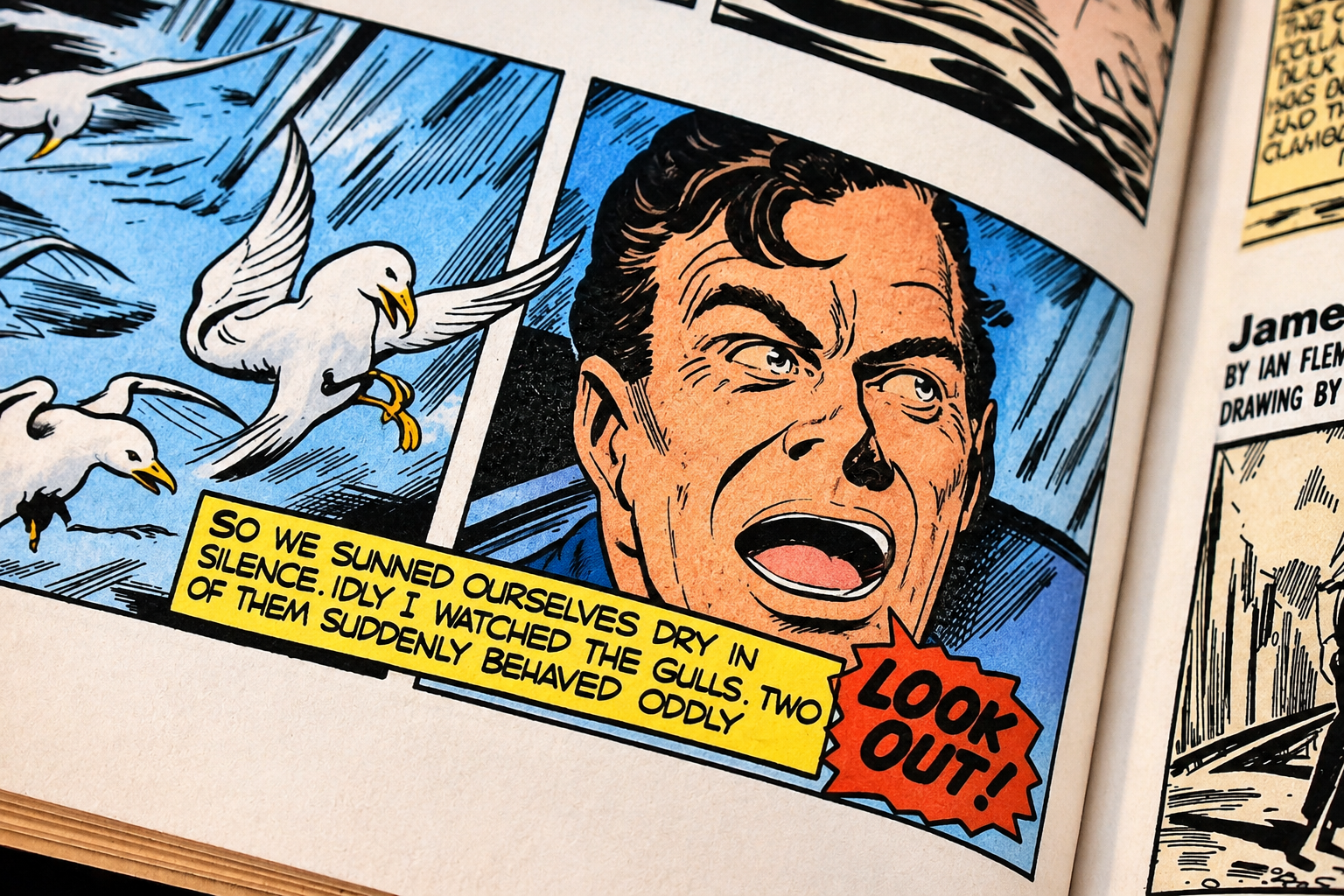
Gala picks a flower and Bond tells her about a scientific study supposedly demonstrating that plants scream when they are cut. This is exactly the kind of strange Fleming detail that makes you want to investigate whether the book he refers to actually existed.
The two go swimming and Bond persuades Gala to join him. But Fleming brilliantly builds tension underneath this apparently relaxed scene.
The reader knows that something terrible is about to happen, and Fleming stretches out the description of the approaching danger rather than simply announcing it. The writing becomes intensely sensory, including the smell of chlorine and the physical qualities of the rock.
The explosion at the cliff face was intended to kill Bond and Brand. The chapter ends with a wonderfully human moment: after the incident, Bond is sick and vomiting.
Chapter 17
Bond and Gala return bruised and shaken.
They meet Drax, Krebs and the others, and Bond notices Drax’s reaction. Although Bond still doesn’t know exactly what Drax is planning, he now knows that the explosion was deliberate.
He has seen evidence on the cliff face indicating that explosives were involved.
Krebs collapses into his food, apparently passing out, and Drax dismisses the incident.Later, Gala uncovers the truth. Drax is revealed to be the monster underneath the respectable public identity.
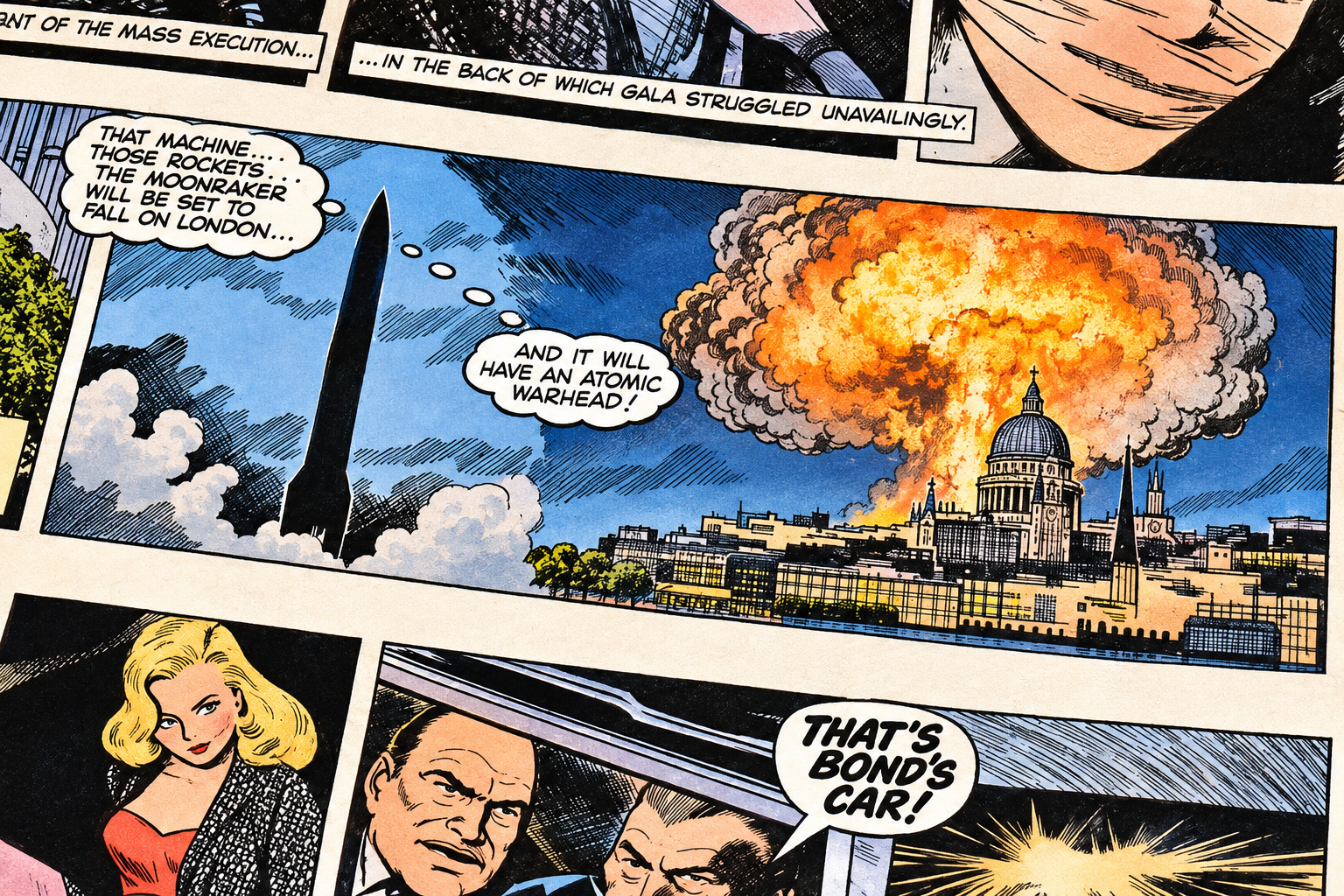
As Gala is driven back towards London, she realises that the information she has been dealing with relates directly to the Moonraker’s flight path.
The rocket is not going to be aimed safely out to sea. It is going to be aimed at London.
Drax’s German identity also begins to emerge, and Gala realises that the launch scheduled for the following day is actually part of a much larger act of revenge.
Chapter 18
The conspiracy now expands beyond the Moonraker itself.
Bond is sitting in his favourite restaurant when news emerges of a run on sterling.
The financial activity appears to be connected to Drax’s trading interests. The British Treasury is becoming increasingly concerned, but nobody has enough evidence to bring the matter to the Prime Minister.
The problem is political as well as financial: a failure involving the Moonraker could become a national scandal.
Meanwhile, Gala Brand has disappeared.
Bond is increasingly concerned and begins trying to trace her movements.
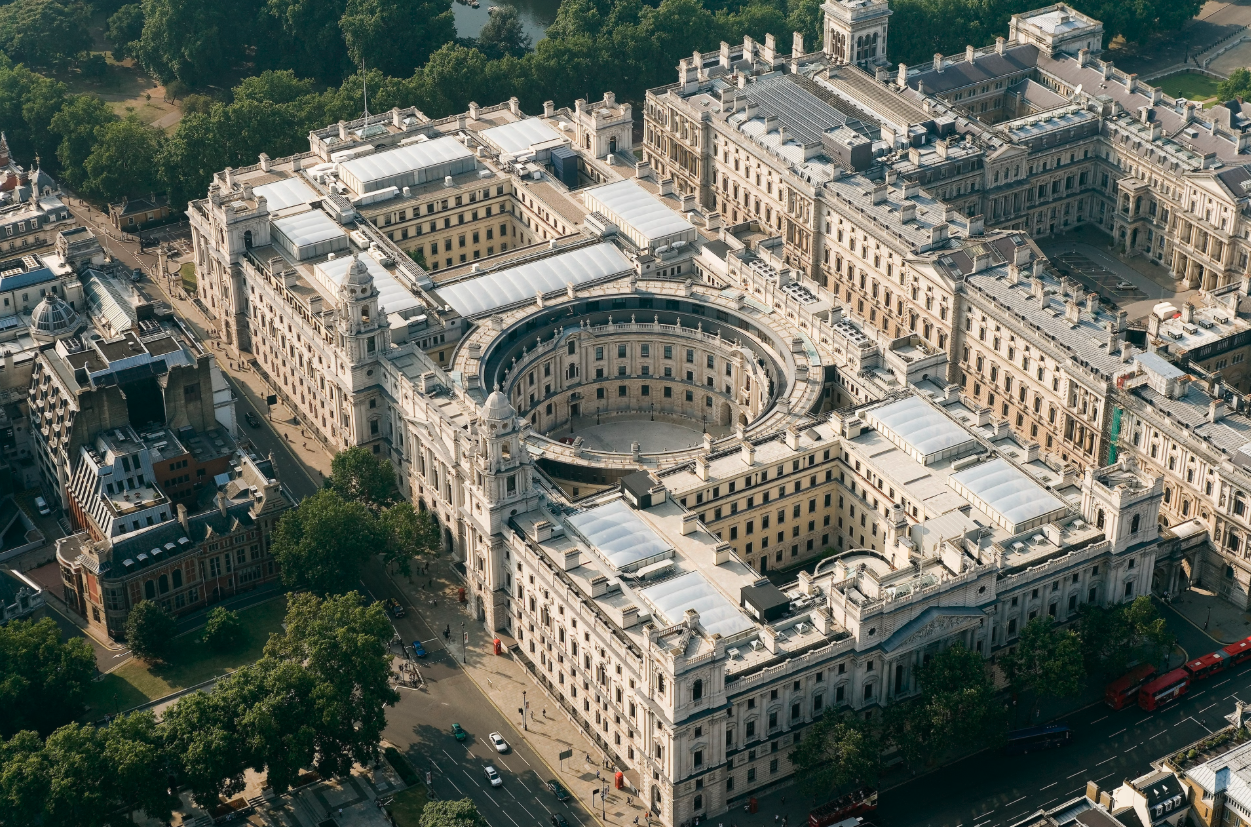
Overview of the HM Treasury in Whitehall. You might recognize the circular Drum from Spectre
Chapter 19
Bond discovers that Drax is at Blades and waits for him.
When Drax leaves, Bond follows him, beginning a pursuit through London.
Bond also reflects on his earlier judgement of Drax. His first impression had been that Drax was simply a vulgar, unpleasant man, but he now understands that there is something much more dangerous underneath.
Bond also realises that Gala is being transported in Drax’s vehicle, hidden underneath a rug.
He still doesn’t understand the entire conspiracy, but he knows that Drax has taken Gala prisoner and that something very serious is happening.
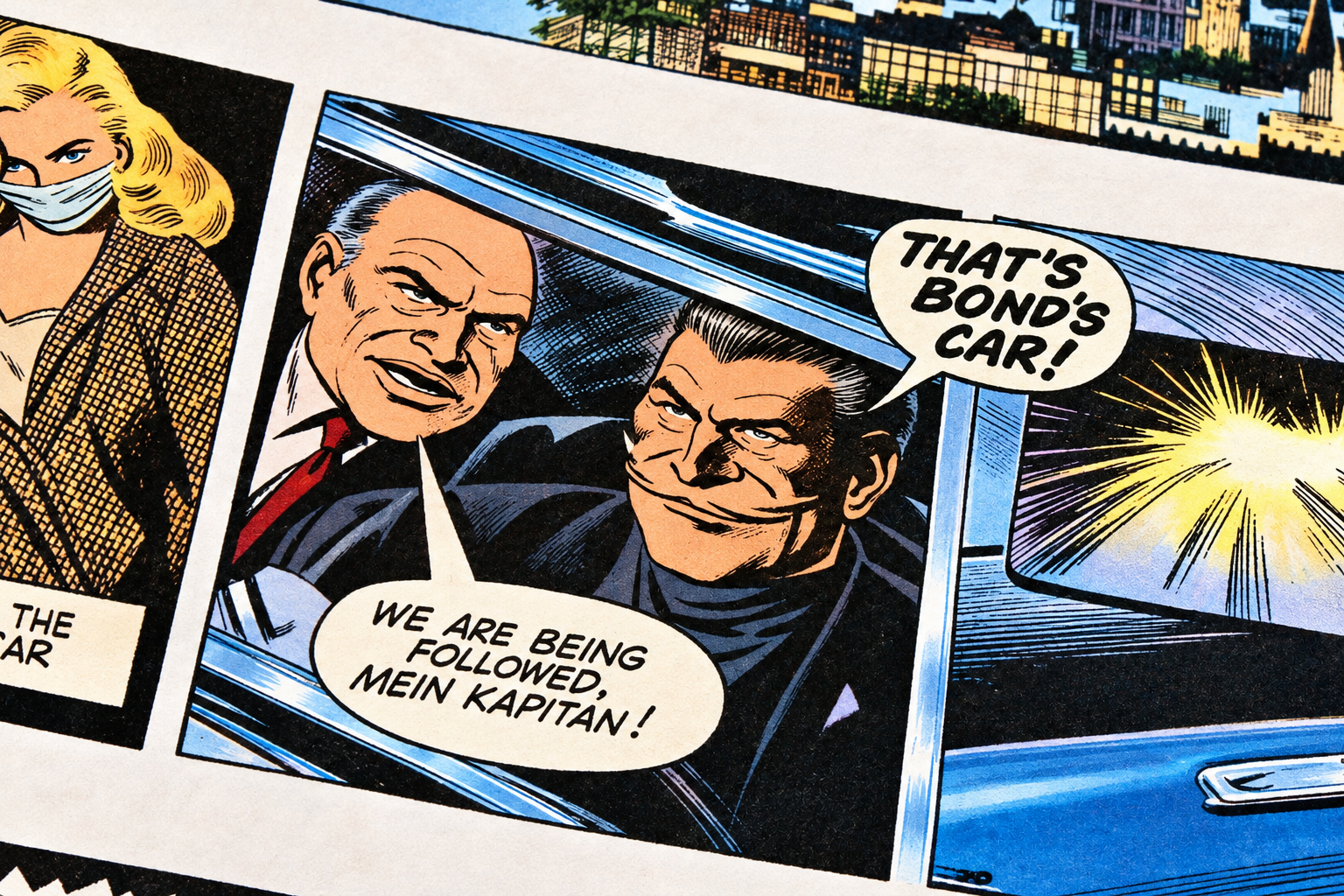
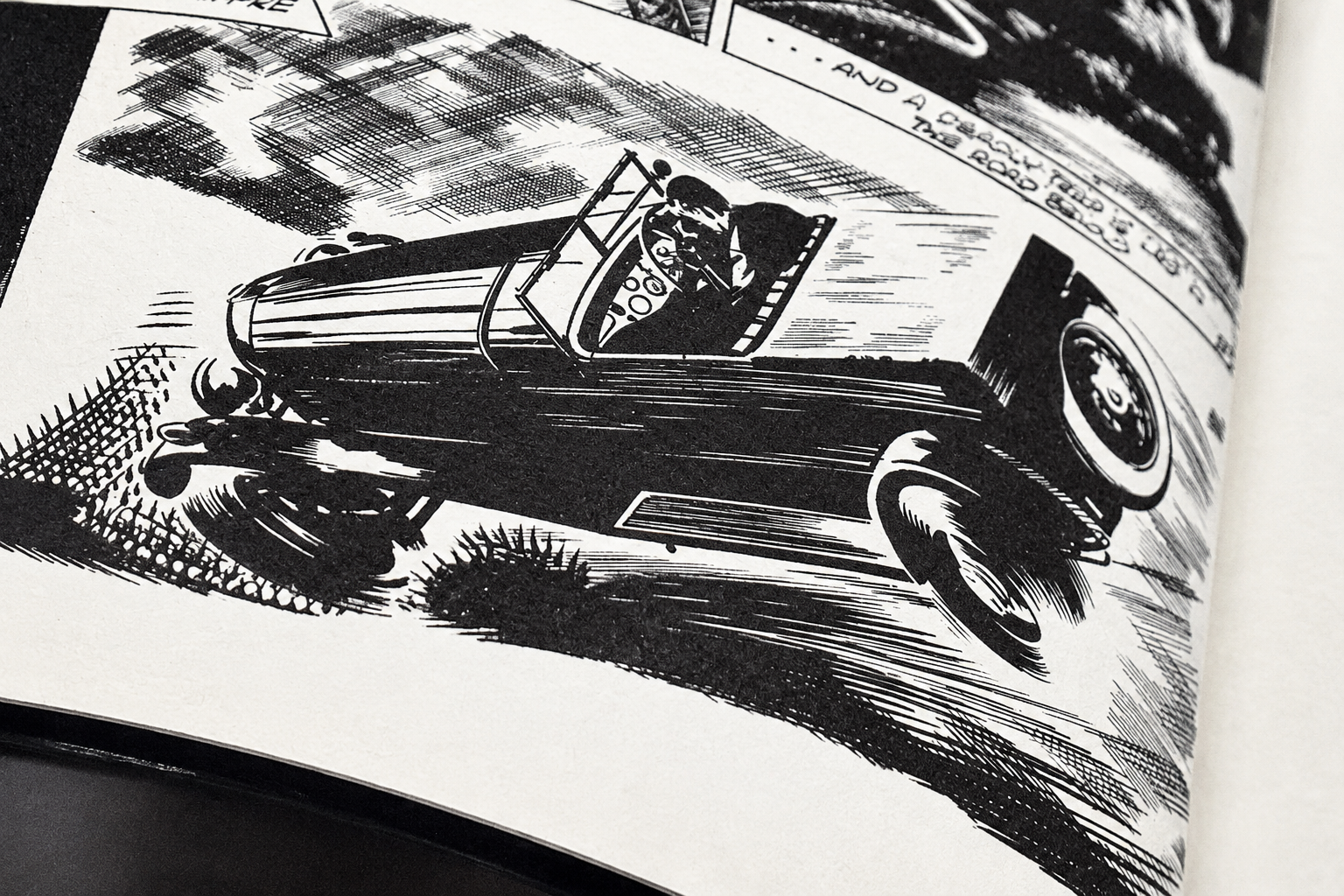
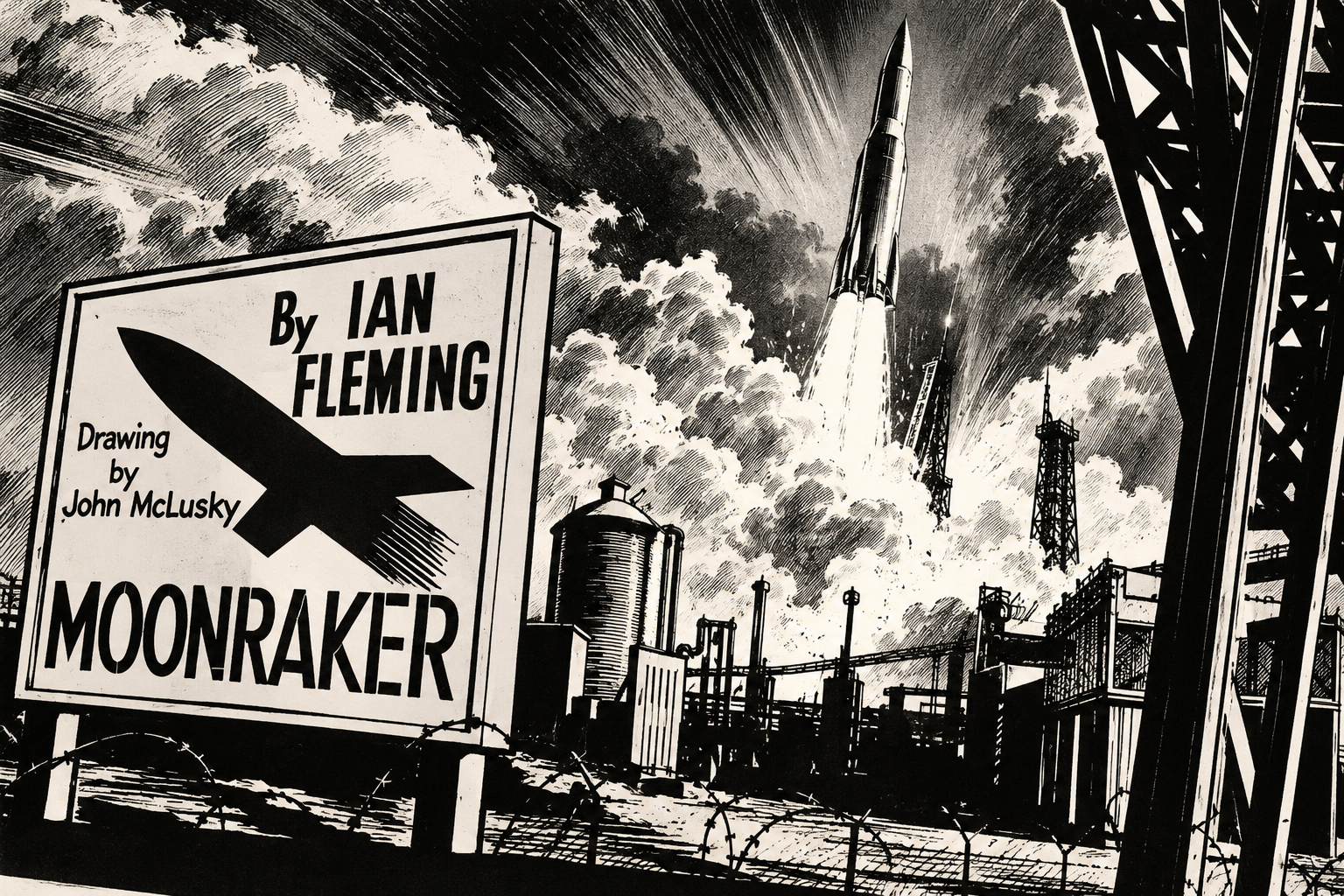
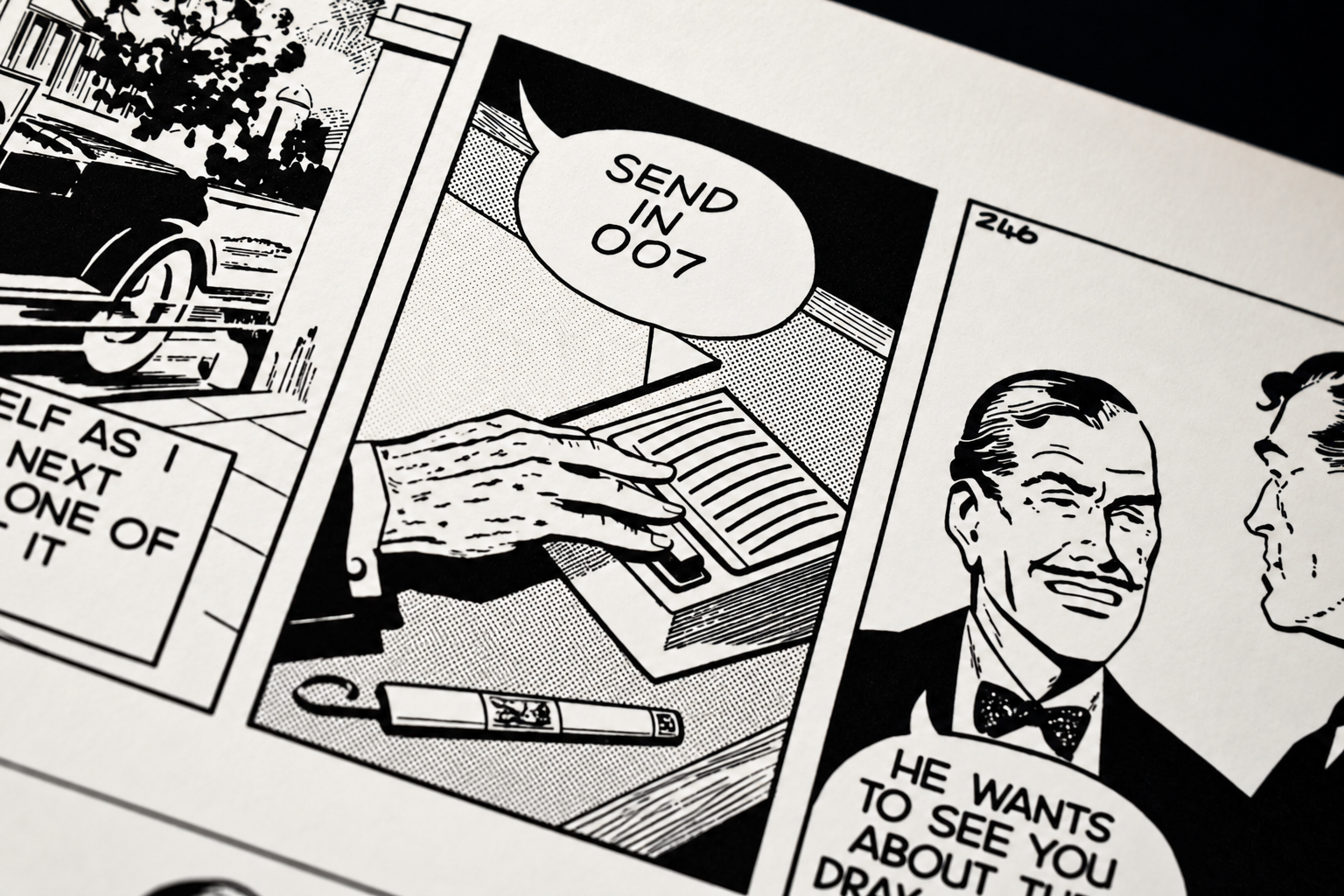
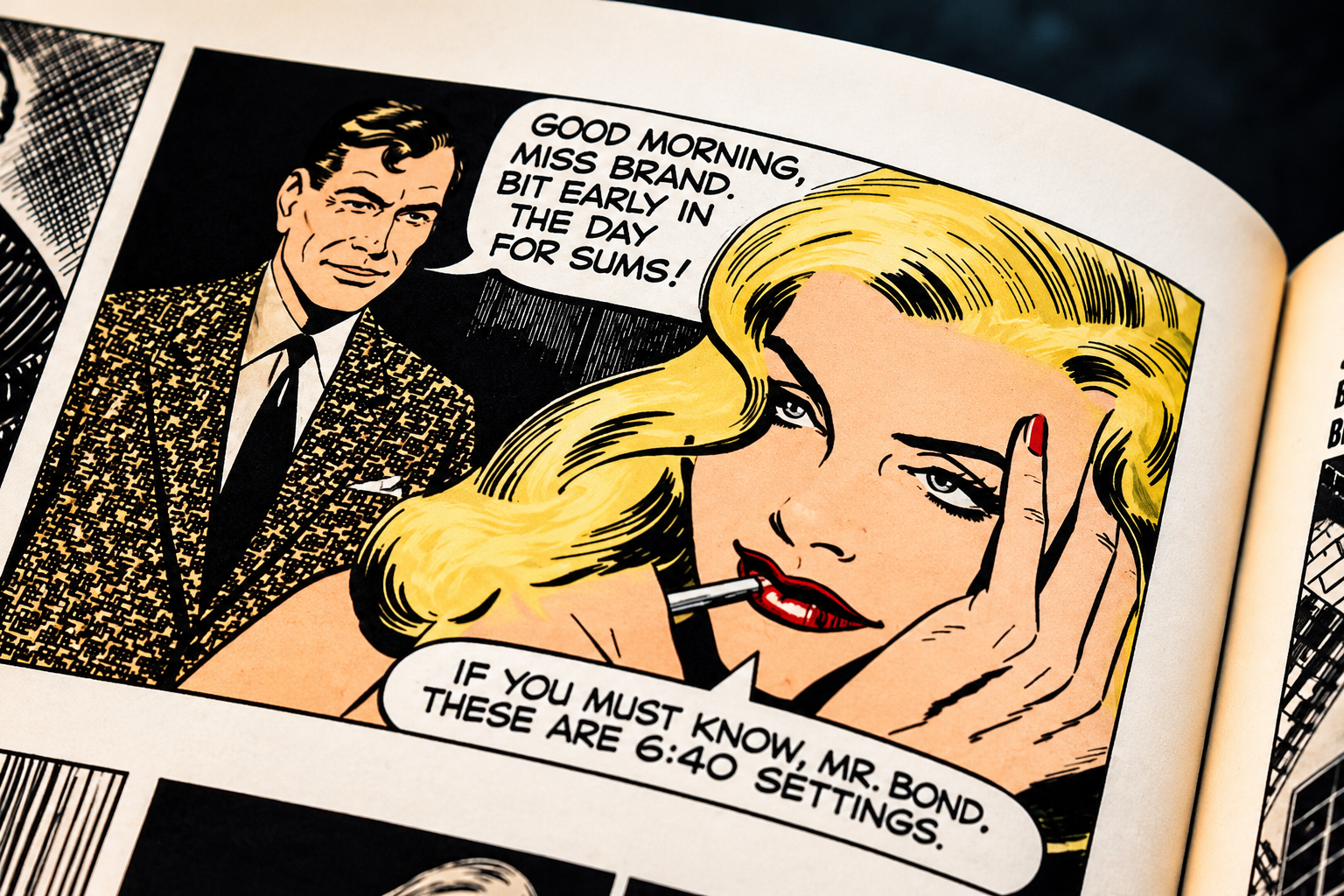
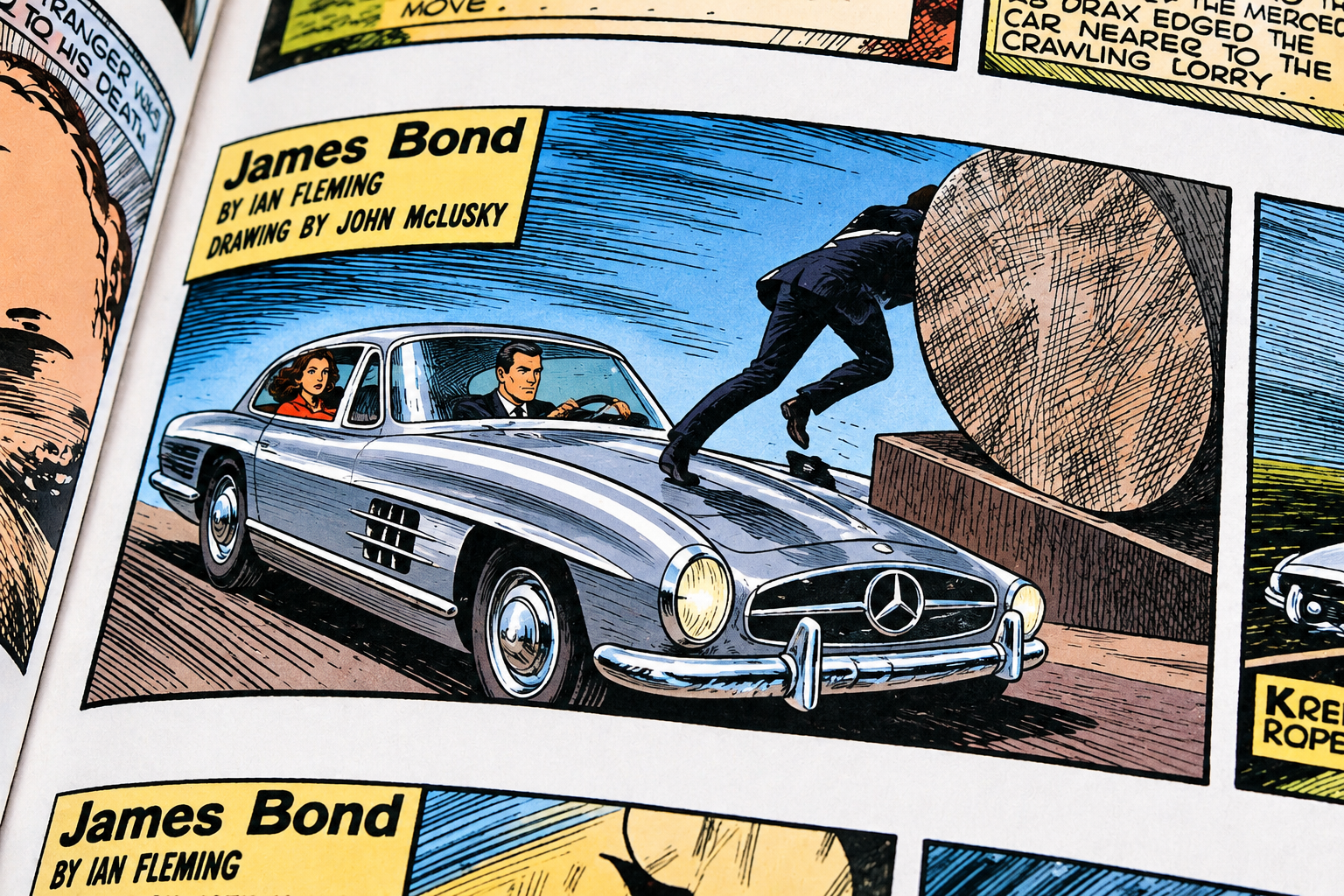
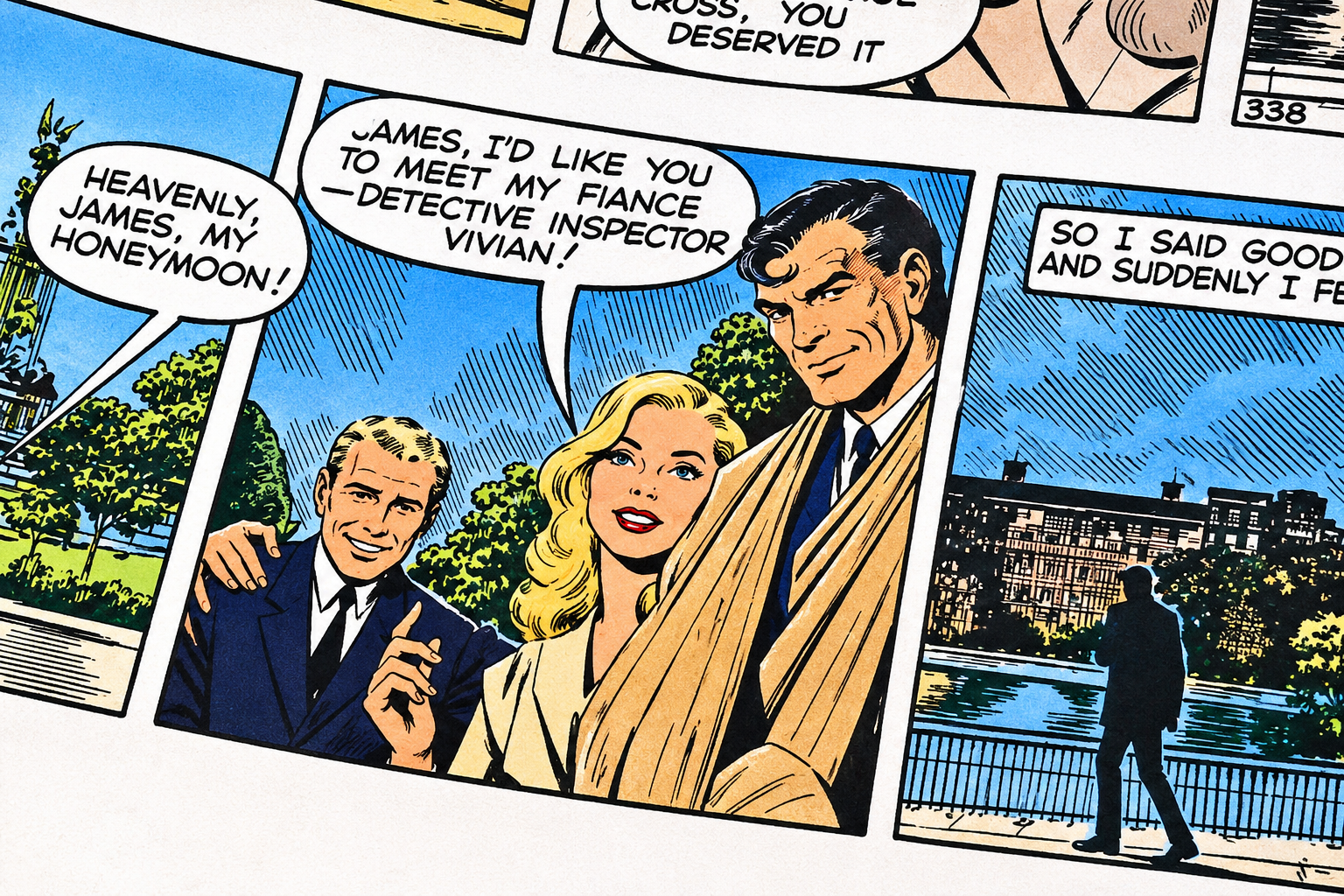
Excerpts from Ian Fleming’s Moonraker drawn by John McLusky
Chapter 20
The pursuit becomes frantic.
Fleming’s writing becomes extremely physical and sensory. He doesn’t simply tell us what is happening; he gives us the sound, smell and movement of the chase.
There is clatter, screaming, horns and engines. The headlights cut through the darkness while the smell of oil enters Bond’s nostrils.
The use of onomatopoeia and alliteration makes the prose feel almost cinematic.
Drax manages to outmaneuver Bond and cause a crash. Krebs also gets involved in the chaos, managing to climb onto another vehicle and interfere with its cargo.
It is an excellent example of Fleming making an action sequence immersive rather than simply describing a sequence of events.
Chapter 21
Bond</strong> survives the crash and is taken back to Drax’s facility. Drax produces his Luger, while Krebs reminisces about his German past.
The German identity of the villains is becoming increasingly obvious. Drax is essentially revealed as a Nazi, although Fleming holds back the full explanation until the following chapter.
Bond and Gala are told that they are going to be among the first people to experience the Moonraker launch at close quarters — which is effectively a death sentence.
There is an interesting parallel here with the novel’s other moments where Bond is placed in a position to be killed by the machinery of a villain’s plan.
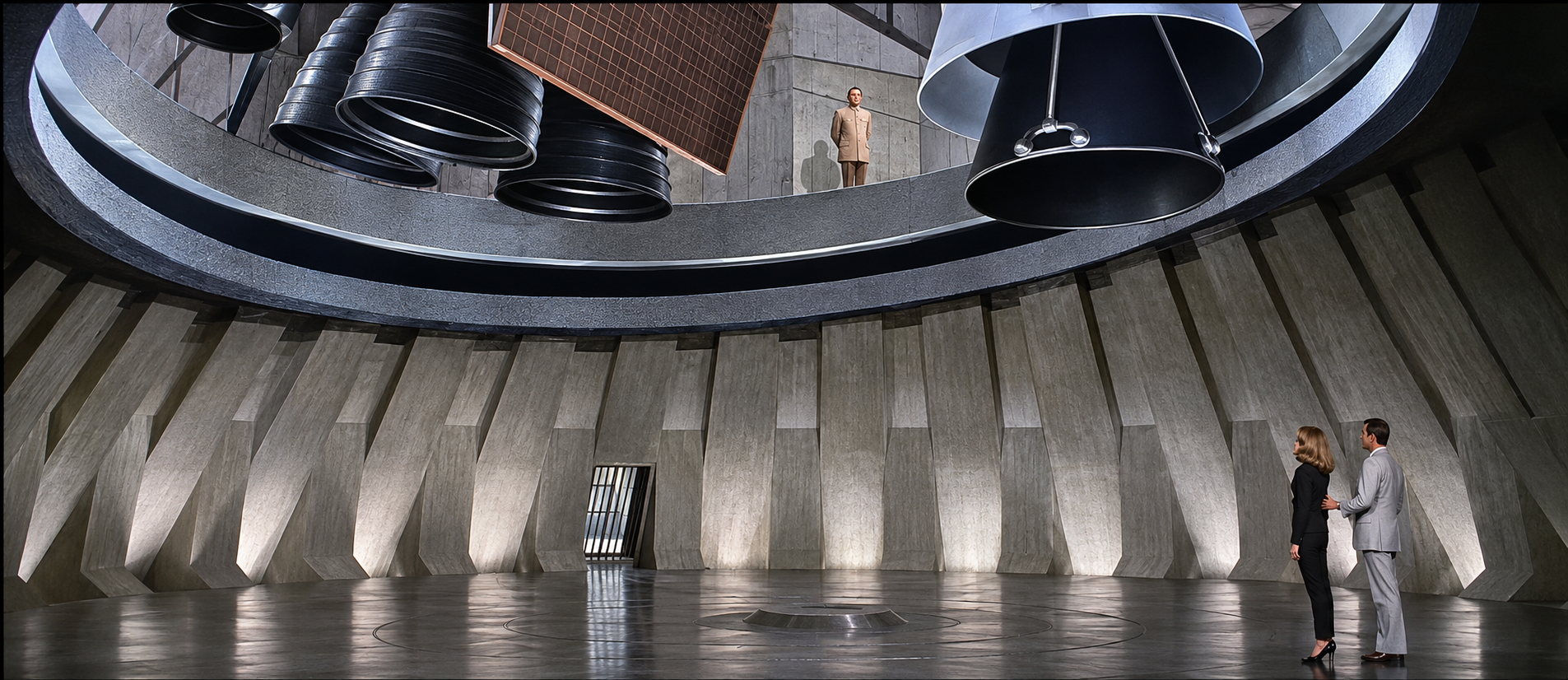
Drax overlooking the blast chamber meant to be Bond’s and Dr Goodhead’s own crematorium – Moonraker 1979
Chapter 22
This is the big villain’s confession chapter, and it is one of the things Fleming does particularly well.
Drax explains his history to Bond.
Bond, rather than simply sitting there passively listening, deliberately provokes him. He mocks Drax’s appearance and suggests that his psychological problems stem from childhood — narcissism, megalomania and so forth.
Drax loses his temper and punches Bond.
Eventually the full truth emerges.
Drax had been a German during the war. He killed an Englishman, stole his uniform and was subsequently shot by his own side. The resulting injuries caused his amnesia.
He was treated in hospital and eventually reconstructed his identity.
His wealth and knowledge of the Moonraker project have allowed him to construct an elaborate revenge plot against Britain.
The central motivation is revealed as hatred: Drax despises England, the English and particularly the ideal of the English gentleman.
This is where the grotesque figure introduced at Blades finally becomes a fully realised villain.
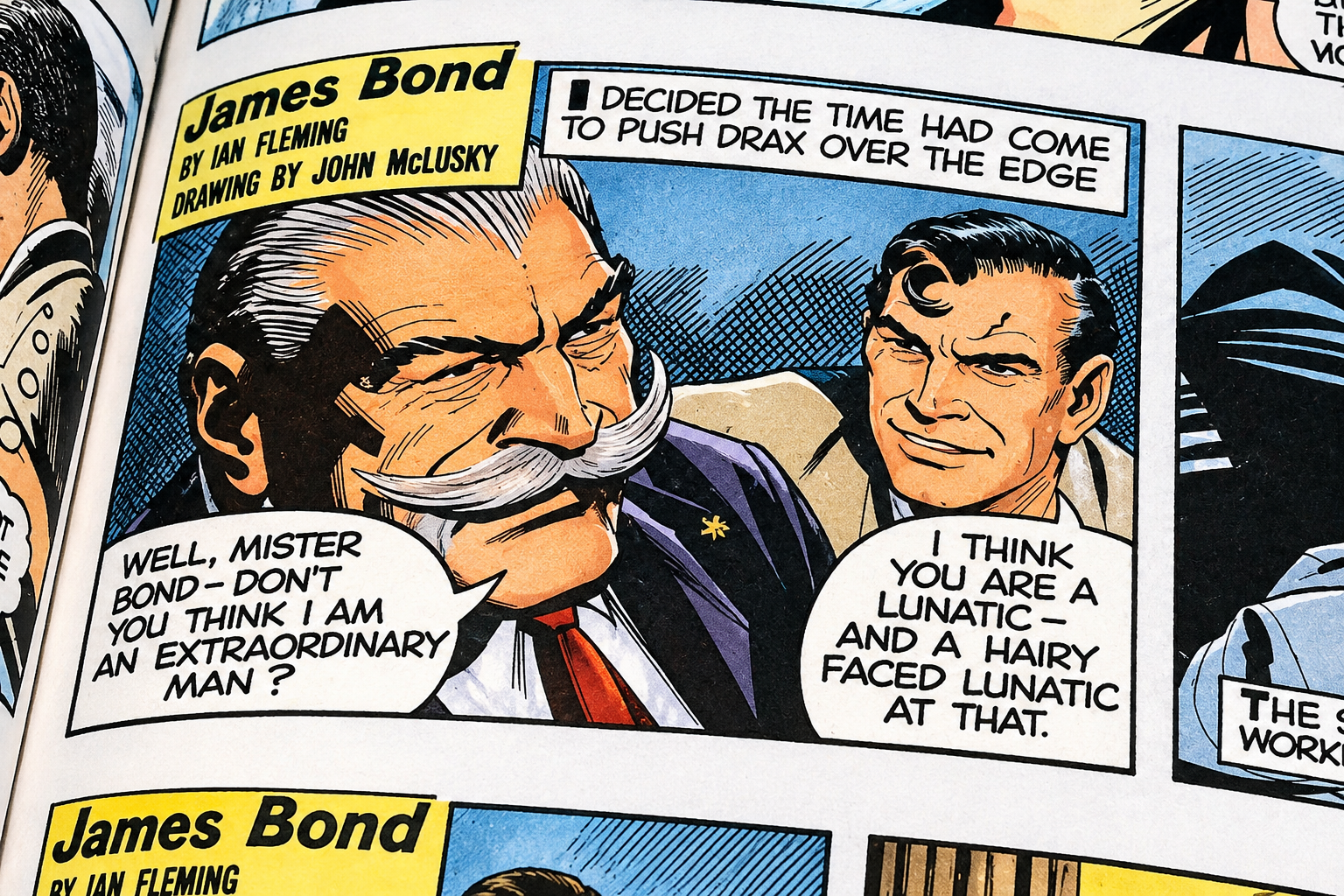
Excerpts from Ian Fleming’s Moonraker drawn by John McLusky
Chapter 23
Bond uses the lighter Drax has left behind to escape his restraints.
The escape has a wonderfully old-fashioned adventure quality to it — almost bringing to mind the kind of escape sequence you might associate with Harrison Ford or Sean Connery.
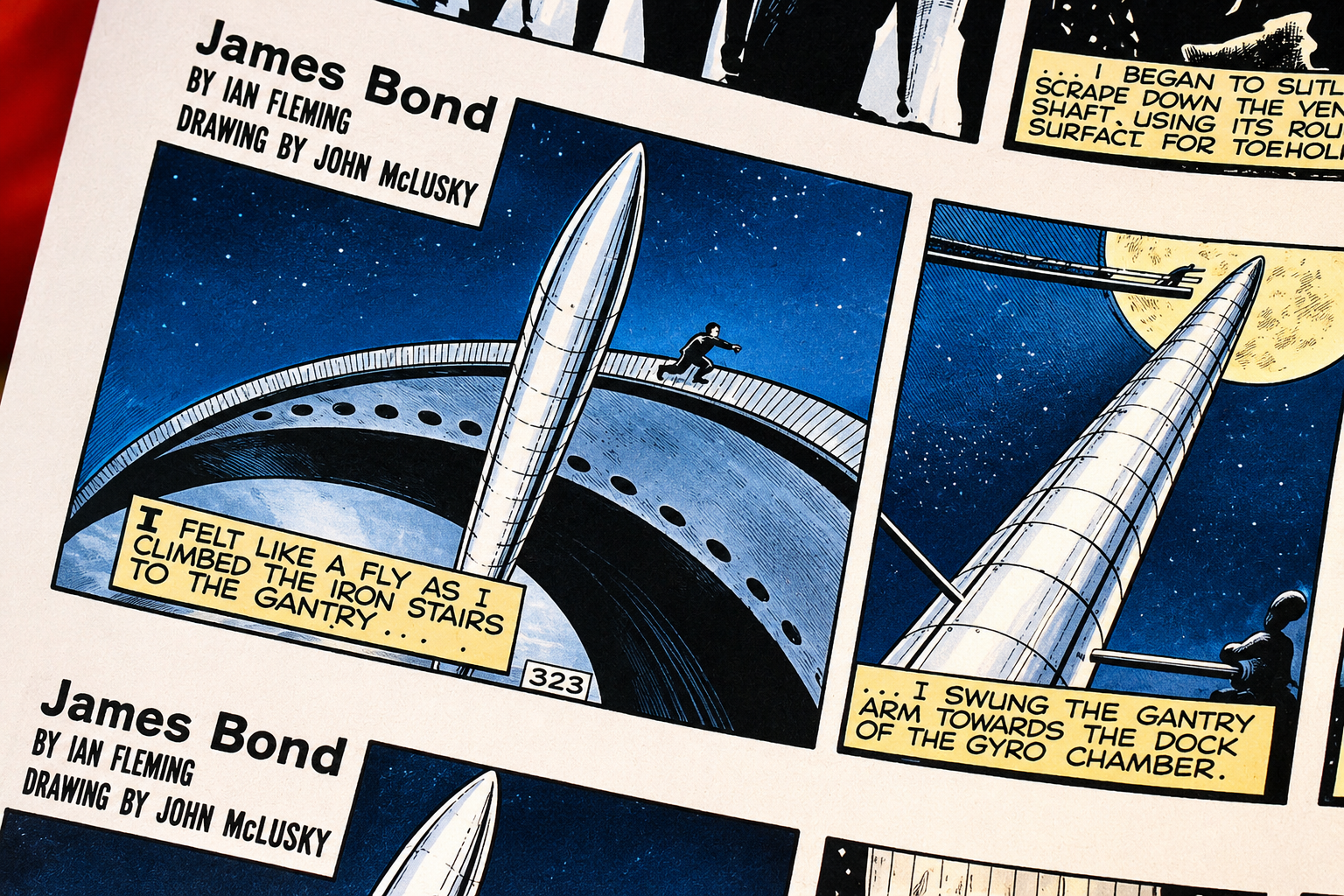
Bond decides that the Moonraker itself can be used against Drax. He plans to ignite the fuel and destroy the rocket.
He tells Gala that he has always wanted to be “the boy on the burning deck”, an image that creates an interesting connection with the kind of self-sacrificial Bond imagery that appears in later stories and films.
Bond and Gala then work together to foil Drax’s plan.
Gala has been providing Drax with the coordinates necessary to guide the Moonraker, but she now realises that those coordinates can potentially be altered.
They attempt to redirect the rocket away from London and towards the North Sea.
Their escape involves hiding within a shaft, where they endure considerable discomfort but eventually survive.
Chapter 24
This is the big set-piece.
Bond watches as Drax prepares to launch the Moonraker and gives a disturbing speech to the assembled public.
The speech has a distinctly Nazi quality to it, particularly in its references to the Fatherland and to future generations remembering this day.
The launch itself is described through the voice of a news broadcaster rather than directly through Bond.
This is an inspired choice because Bond isn’t necessarily in a position to witness the entire launch from a useful vantage point. Instead, Fleming allows the reader to experience it as the British public would: through the radio broadcast.
It also adds another layer of realism. The Moonraker is no longer simply Bond’s adventure; it has become a major national event being followed by millions.
Drax ultimately escapes towards the submarine while the fate of his plan is determined.
This chapter works particularly well as drama and as a piece of spectacle.

Chapter 25
The novel ends with Bond meeting M.
There is going to be a huge cover-up.
The British establishment doesn’t want the truth about Drax exposed because too many people would be embarrassed or implicated. There are political consequences, questions about the project and the possibility of foreign involvement.
Drax himself is effectively going to be turned into a hero, allowing everyone involved to walk away with as little damage to their reputations as possible.
It is a wonderfully cynical Fleming ending: even after Bond has saved Britain, the official version of events will be manipulated.
Bond then says goodbye to Gala Brand.
He assumes that this might develop into a conventional Bond relationship, but Gala tells him that she intends to marry another man.
It gives the book a surprisingly tender ending.
There is no obligatory Bond-sex scene simply for the sake of having one. Bond and Gala genuinely seem to have developed feelings for one another, but she is the one who gets away.
Bond is disappointed and jealous, but there is something almost touching about it. Gala is not simply another woman Bond sleeps with and forgets. She has made a genuine impression on him.
The contrast with Drax is also striking. Fleming has spent much of the novel describing Drax in increasingly grotesque physical terms, while Gala is described with considerable beauty.
The result is an ending that is much more emotionally restrained than the traditional Bond formula might suggest.
Overall Thoughts on Ian Fleming’s Moonraker
I have put my thoughts into three distinct sections.
1. Blades — the first act
For me, this is arguably the strongest part of Ian Fleming’s Moonraker.
The gambling, Drax’s introduction, Bond’s relationship with M, the food and wine, the clothes, the London locations and the card game all create a wonderfully convincing world.
Drax is particularly effective because Fleming doesn’t initially present him as a conventional villain. He is a celebrated national hero who is also a cheat, a bully and an utterly unpleasant human being.
2. The Moonraker investigation — the middle act
This is where the pace slows down.
There is a great deal of exposition about rockets, engineering, Drax’s workforce, Gala’s investigation and the murders. Much of it is extremely well written, but there is a feeling that the reader is waiting for the story to become more exciting.
The Japanese drug document is perhaps the clearest example of this: even Bond seems to wonder why he is reading it.
Yet this section is important because Fleming is building credibility. The Moonraker doesn’t feel like a magical Bond gadget. It feels like an actual piece of post-war British engineering, which makes the eventual revelation of its true purpose much more effective.
3. The conspiracy and climax — the final act
Once Bond discovers that the Moonraker is intended to destroy London, the novel accelerates dramatically.
The car chase, Drax’s confession, Bond and Gala’s escape and the rocket launch provide the kind of escalating adventure expected from a Bond novel.
And perhaps the most surprising element is Gala Brand. Rather than ending with another conventional Bond conquest, Fleming gives Bond a woman he genuinely seems to care about — and then takes her away from him.
It affirms the story arc of Gala Brand being a woman of discipline and resolve, whilst wrong-footing the reader by not sticking to the genre trope of the man getting the girl at the end of the novel.
FURTHER READING
The OTHER James Bond Venice Locations