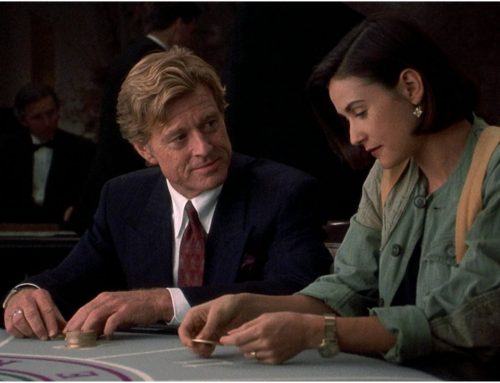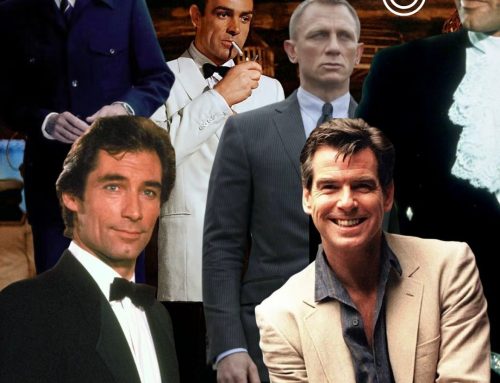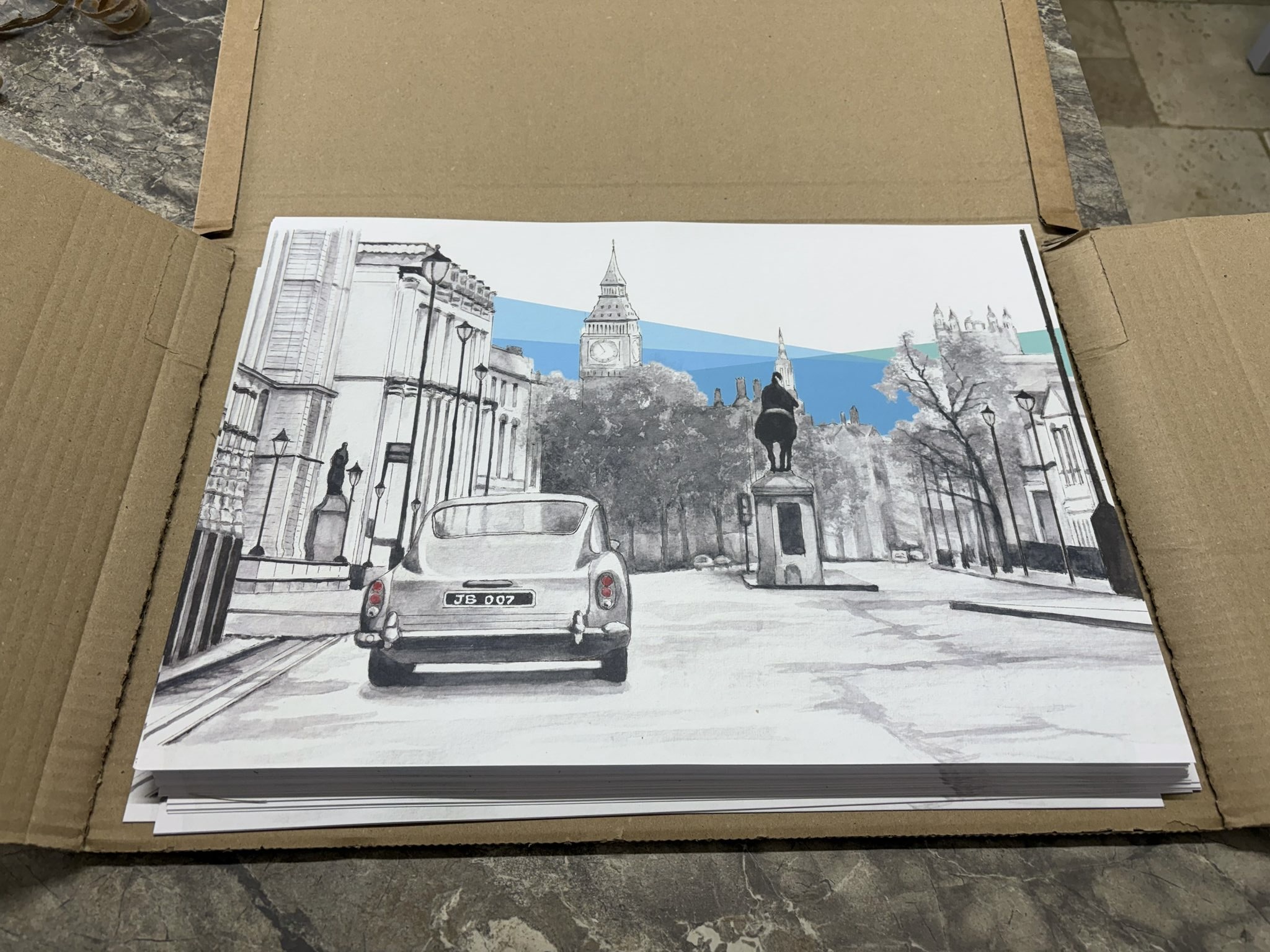
In this series, I’m going through each chapter of Ian Fleming’s Casino Royale, looking at what I enjoy about each one and comparing the novel with the 2006 film adaptation. I’ll also point out the similarities, differences, and interesting details that made their way from the book onto the screen.
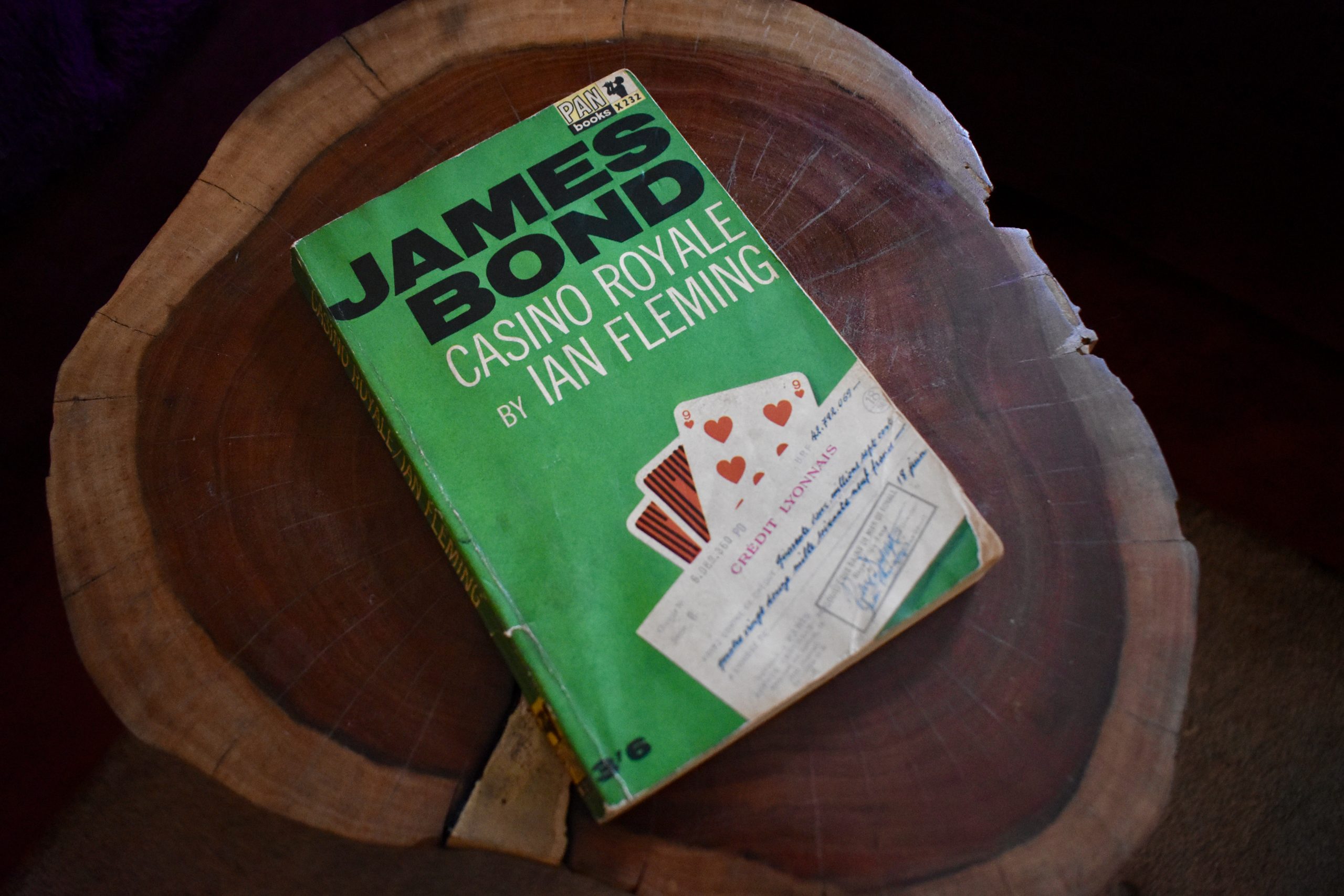
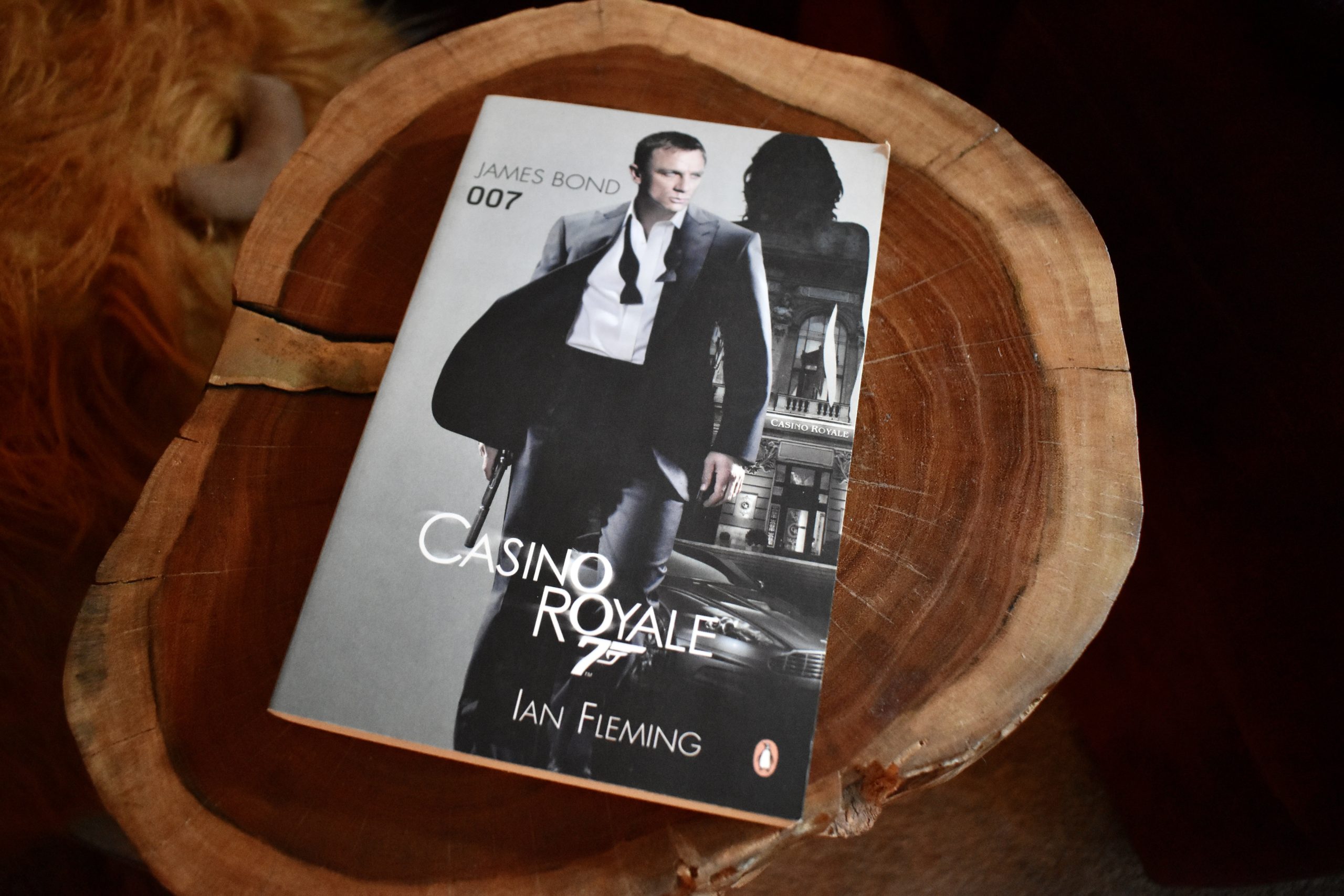
Ian Fleming’s Casino Royale
Chapter One
A great opening line to the book, describing the scent and sweat of a casino at 3am in the morning as nauseating. It establishes Bond at the end of his gambling day. He has been observing Le Chiffre and is already anticipating what the caissier (French word for Cashier or Bank Teller) is saying in his end-of-day report to his boss.
Bond then goes back to the hotel and does some correspondence with M regarding the funds. My favourite bit is how Bond goes through his routines once he gets back to the hotel.
The Routine
It doesn’t make him feel paranoid; he knows these routines are necessary. He checks the talcum powder on the handles of the bathroom cabinets, the water level in the toilet cistern against the scratches on the ballcock, and, my favourite, one of his own hairs that he places on the drawers of the bedside table. Something the celluloid Bond does in Dr. No.
When he goes to bed between the rough French sheets, his last action before sleep is to grip the butt of his gun. This was referenced in Tomorrow Never Dies when Paris Carver asks Bond, “Do you still sleep with a gun under your pillow?” We hear it again when Ms Frost tells Bond in Die Another Day, “It was so nice of you to bring your gun to bed.”
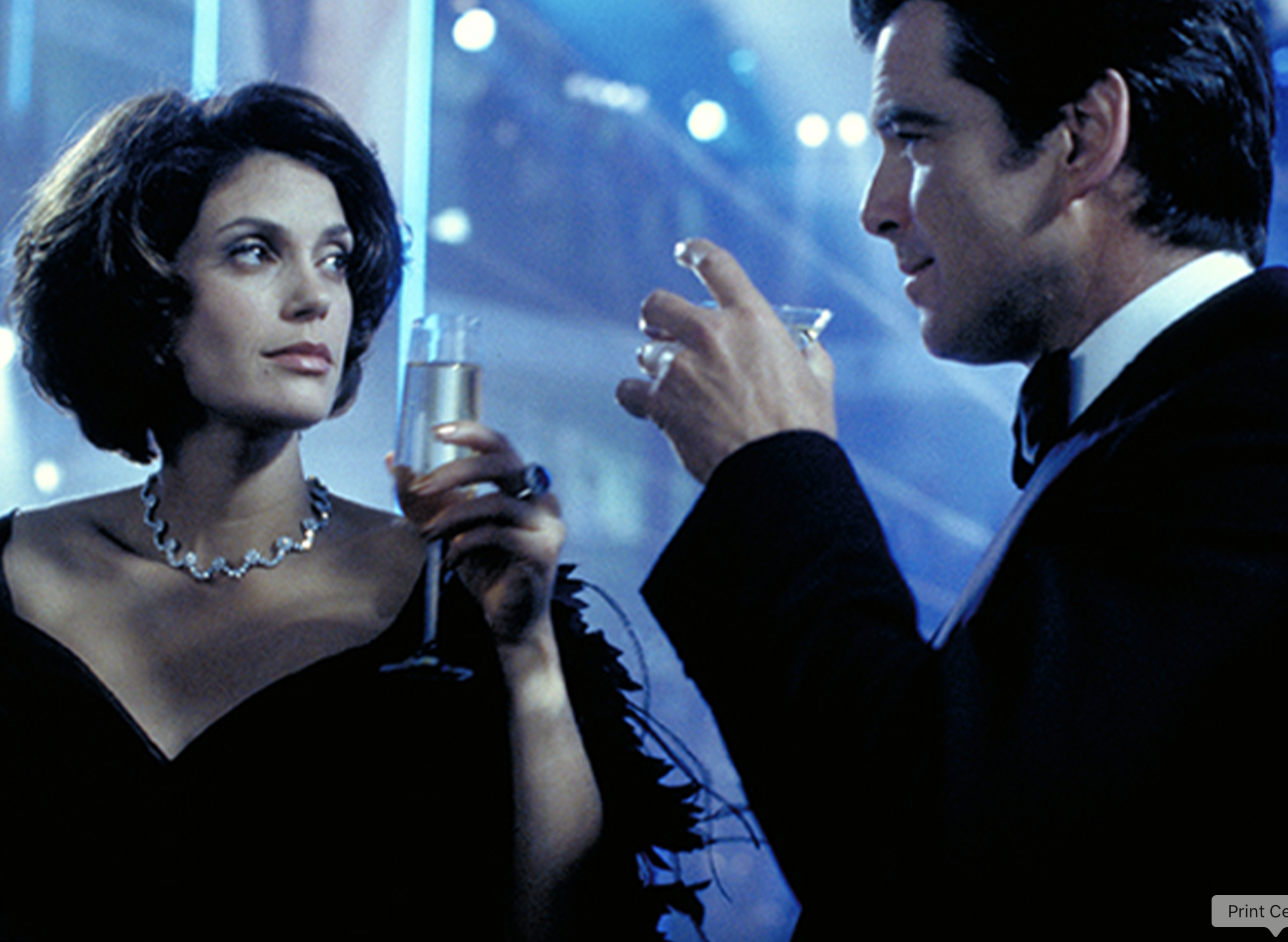
An old flame of James Bond (Pierce Brosnan), Tomorrow Never Dies’ (1997) Paris Carver (Teri Hatcher)
Chapter Two
We are now given a flashback. M is given a briefing on a Russian agent called Le Chiffre – essentially just a number on a passport. He is told that the “straws in the wind” suggest that Le Chiffre has been speculating with his clients’ money. His mini-empire is falling apart.
A new law in France has made “pimping” illegal, taking the floor from under his investments in pornography and prostitution.
A plan is presented to M: Le Chiffre should be out-gambled at a high-stakes baccarat table by one of the men from the Secret Service.
According to the book, For Your Eyes Only, Ian Fleming + James Bond by Ben Macintyre,
[…] Fleming gambled at the casino with some Portuguese businessmen, and lost. On leaving, Fleming remarked: ‘What if those men had been German secret service agents and supposed we had cleaned them out of their money; now that would have been exciting.’
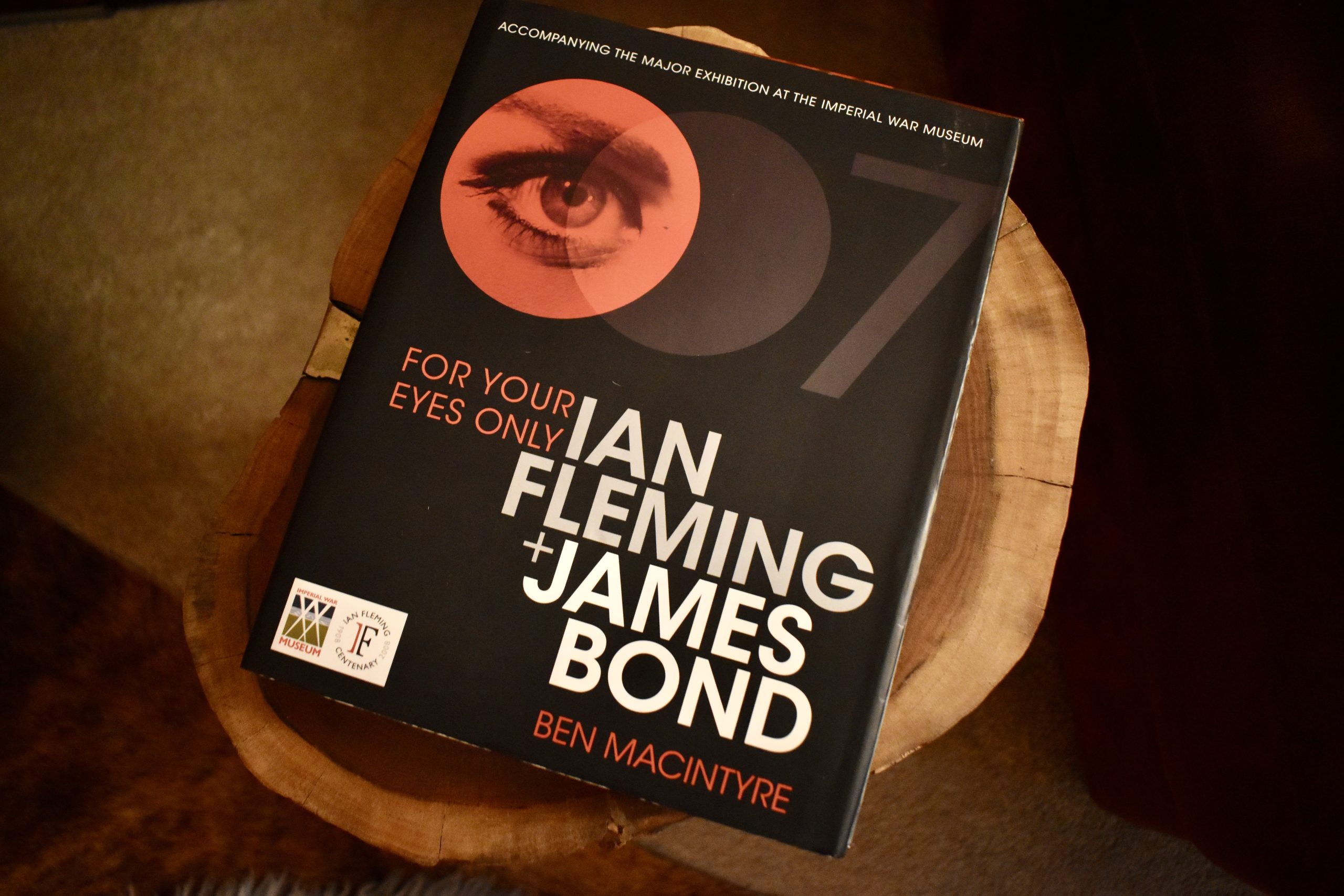
For Your Eyes Only, Ian Fleming + James Bond by Ben Macintyre
A detailed physical description of Le Chiffre is given, although none of it really fits Mads Mikkelsen’s version of the character. The benzedrine inhaler is mentioned, though, which is an interesting detail retained in the film.
In the film M gives Bond this debriefing in the Bahamas after he saves Skyfleet from being bombed in a Miami airport. Le Chiffre has bet against the market and lost millions thanks to Bond. I do like the line, ‘do you want a clean kill or do you want to send a message?’ That is cold Fleming-Bond, but only in the film and not in the book.
Chapter Three
Bond meets M in the building off Regents Park.
There is an interesting backdrop to SMERSH and its origins. It is presented as the most feared organisation in Russia. Fleming portrays SMERSH as the rogue arm of the KGB, with only around 100 operatives, and even drops in real-life references, such as the murder of Trotsky in Mexico.
There is also some mention of Hitler and retreating Soviet Russians being executed.
Was SMERSH real?
YES! Originally created to combat German spies, saboteurs and anti-Soviet elements within the Red Army, the real-life SMERSH was a brutal force.
Bond gets briefed and is given the job of taking down Le Chiffre, partly because of his experience on a previous operation with Mathis, who M wants assigned to help Bond with this case. This is referenced in the film when M tells Bond, ‘Villiers tells me you were the best player in the service, trust me I wish it wasn’t the case.’
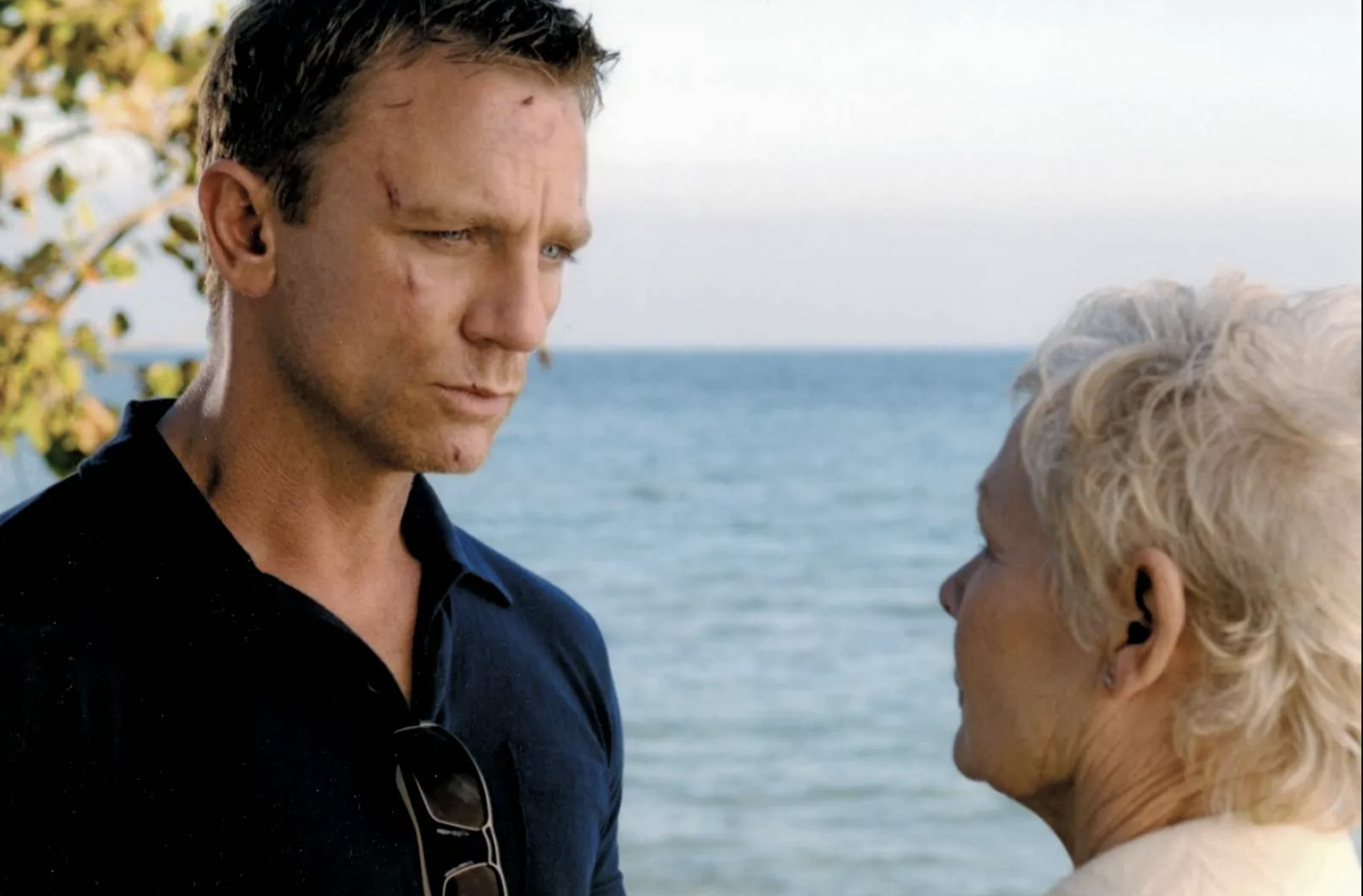
‘According to Villiers, you’re the best player in the service.’ Bond and M in Casino Royale EON Productions 2006
In the film Casino Royale, Bond is introduced to Mathis for the first time, eliminating the history they shared in the book.
Bill Tanner is mentioned as Chief of Staff, and Q is also mentioned. Q is missing from the film entirely. Bond is told how much money will be at his disposal when he gets to the Hotel Splendide. It is the same hotel used in the film, although in real life the location was the Grandhotel Pupp in Karlovy Vary.
Chapter Four
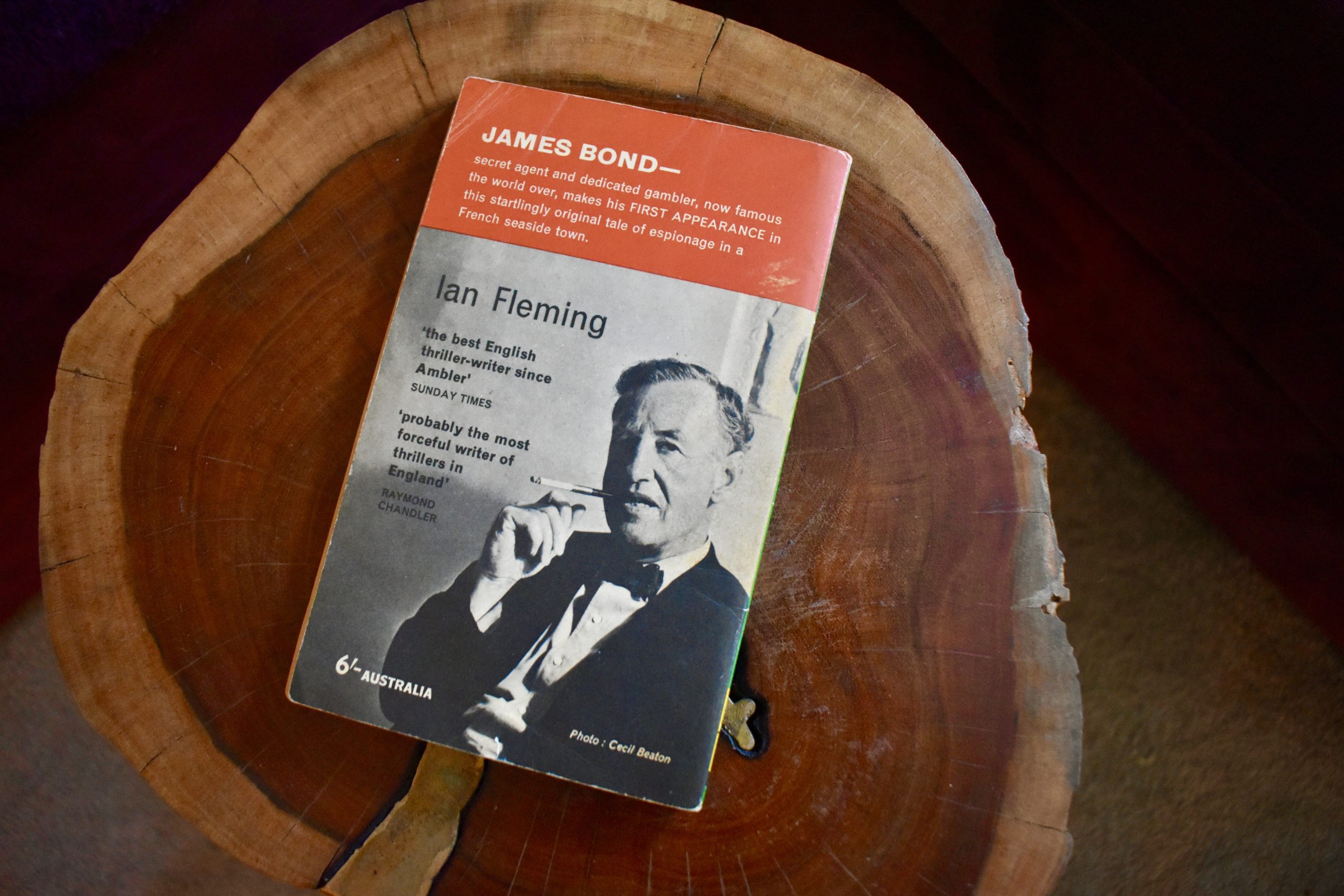
Bond has his breakfast: black coffee with no sugar, a cold shower, and a cigarette. He meets up with Mathis at the hotel, who tells him that his cover has been blown and that even the Muntzes upstairs are listening in to their conversation. Bond is alarmed that his cover has been blown so quickly.
Mathis also mentions that he has seen Vesper and that Bond will be very pleased with her beauty. Bond is not particularly keen on having a woman on the job, saying that women confuse things with sex and feelings.
One of the best written scenes in the film is the meeting between Bond and Vesper on the train. It’s not featured in the book. The Muntzes listening in are also omitted.
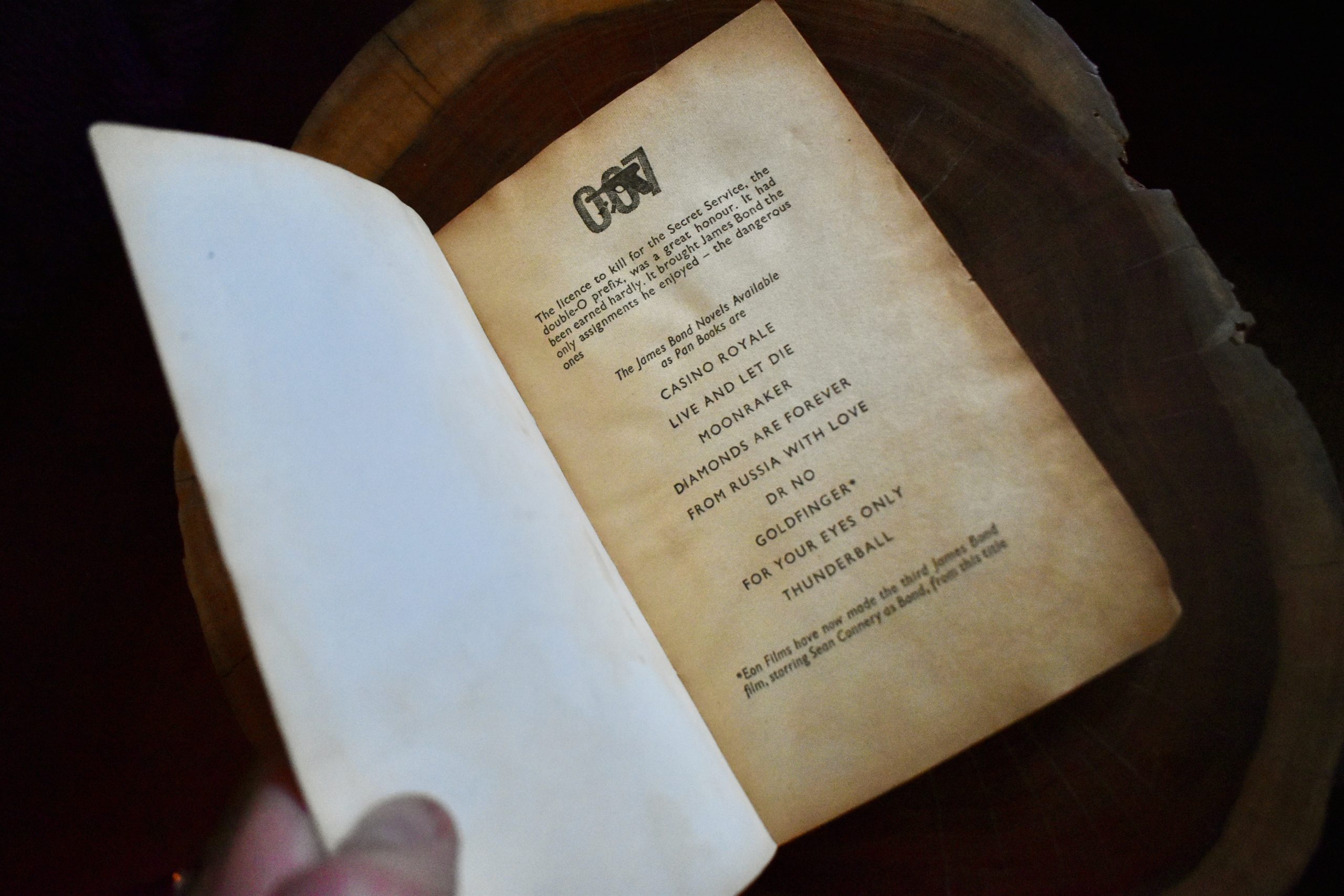
Ian Fleming’s Casino Royale
Chapter Five
Fleming gives us some history of Casino Royale, including how they used to sell bottled water before getting beaten by Perrier.
Mathis introduces Vesper to Bond. Bond confesses to himself that he’d like to sleep with her.
Vesper then describes Bond to Mathis as a Hoagy Carmichael lookalike. Mathis says that no one has managed to melt Bond’s icy heart – a line he gives to Bond in the film.
The chapter ends with the sheet of glass smashing and a bomb exploding outside.
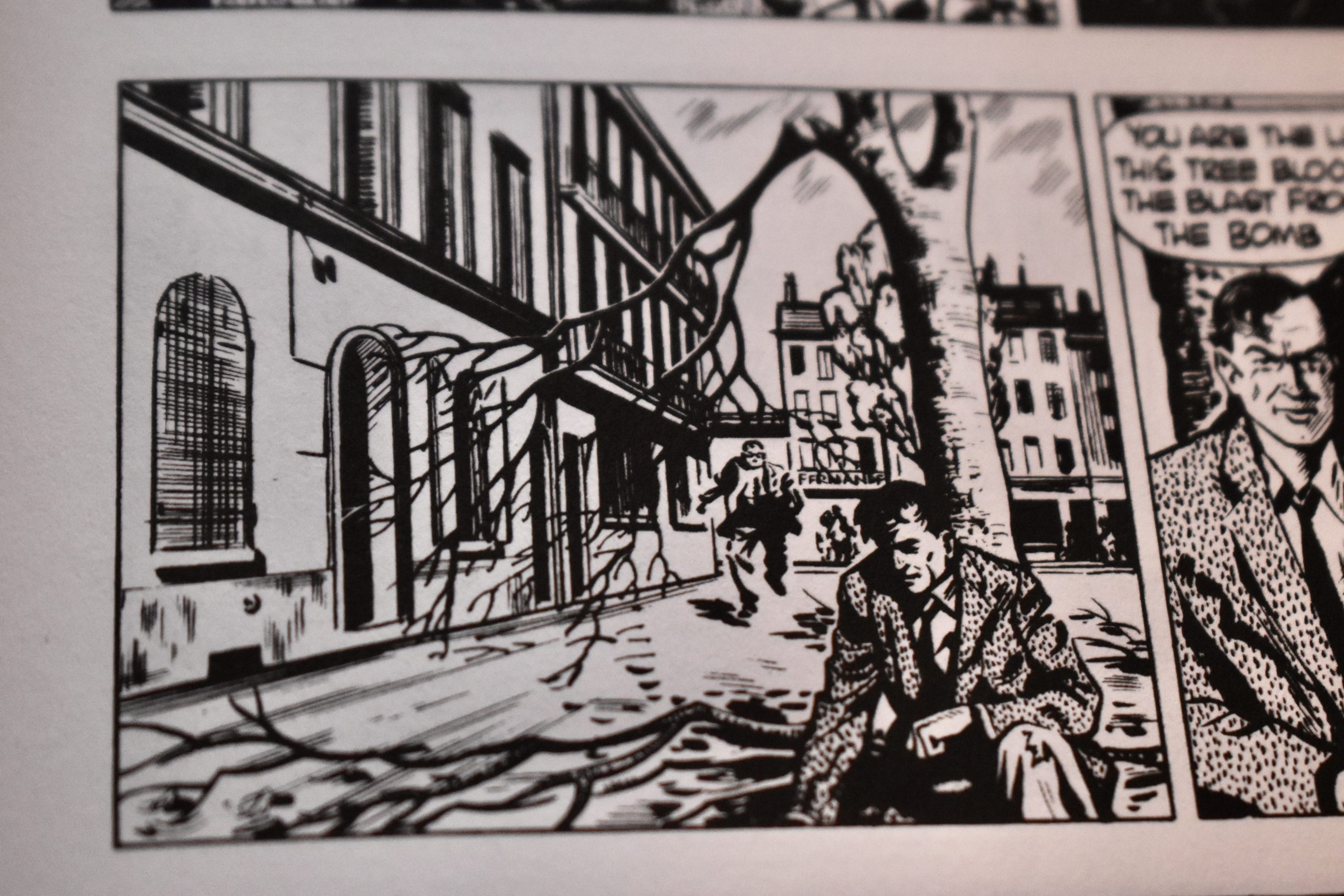
John McClusky’s adaption of Ian Fleming’s Casino Royale
Chapter Six
Bond gets blown up by the bomb but survives by hiding behind a tree. Meanwhile, the bomb makers get blown up themselves. Bond notices that they were wearing suits that were too warm. This tells the reader that Bond studies everything around him. His key to survival is his ability to notice when something is just slightly out of place.
I also love the description of the bomb:
“… the air went on twanging with the explosion as if someone had hit the lower register of a piano with a sledgehammer.’
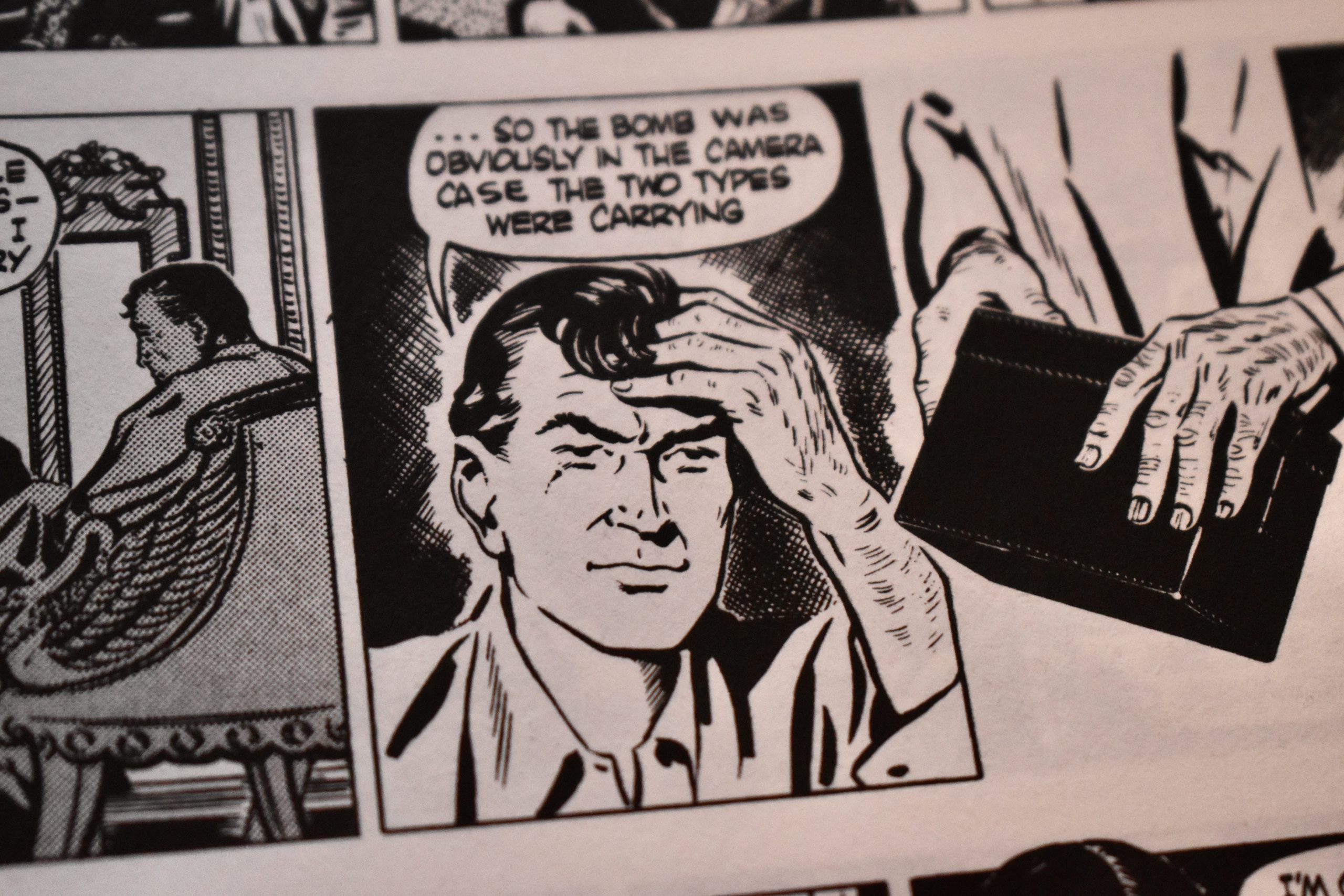
John McClusky’s adaption of Ian Fleming’s Casino Royale
The aftershock
Mathis helps Bond back to the room, orders a roadblock for the remaining Bulgarian bomber who had escaped, and Bond has breakfast.
There is an interesting nod to Strasbourg china. Strasbourg ware was a thing back in the day. You can buy some on eBay, but I hate eBay, so I’m loath to link to anything there.
Vesper Lynd calls to make sure Bond is OK. Bond surmises that two of the bombers are dead and that he has enlisted one of them – Vesper. None of this is in the film.

An example of Strasbourg china
Chapter Seven
Fleming talks about Bond’s love of gambling and his philosophy of luck: luck needs to be a servant, not a master, and you shouldn’t mistake bad play for bad luck.
He orders a drink in the same way he does in the film and then admits that he doesn’t like small portions of anything.
At the roulette wheel, Felix Leiter joins him – “the pilot fish to the shark.” Fleming is already telling his audience that Felix is a secondary character. (Perhaps it would have been good of Jack Lord to take heed of this advice rather than demand equal billing). Felix even admits to Bond that he is at his service and that Bond is in charge.
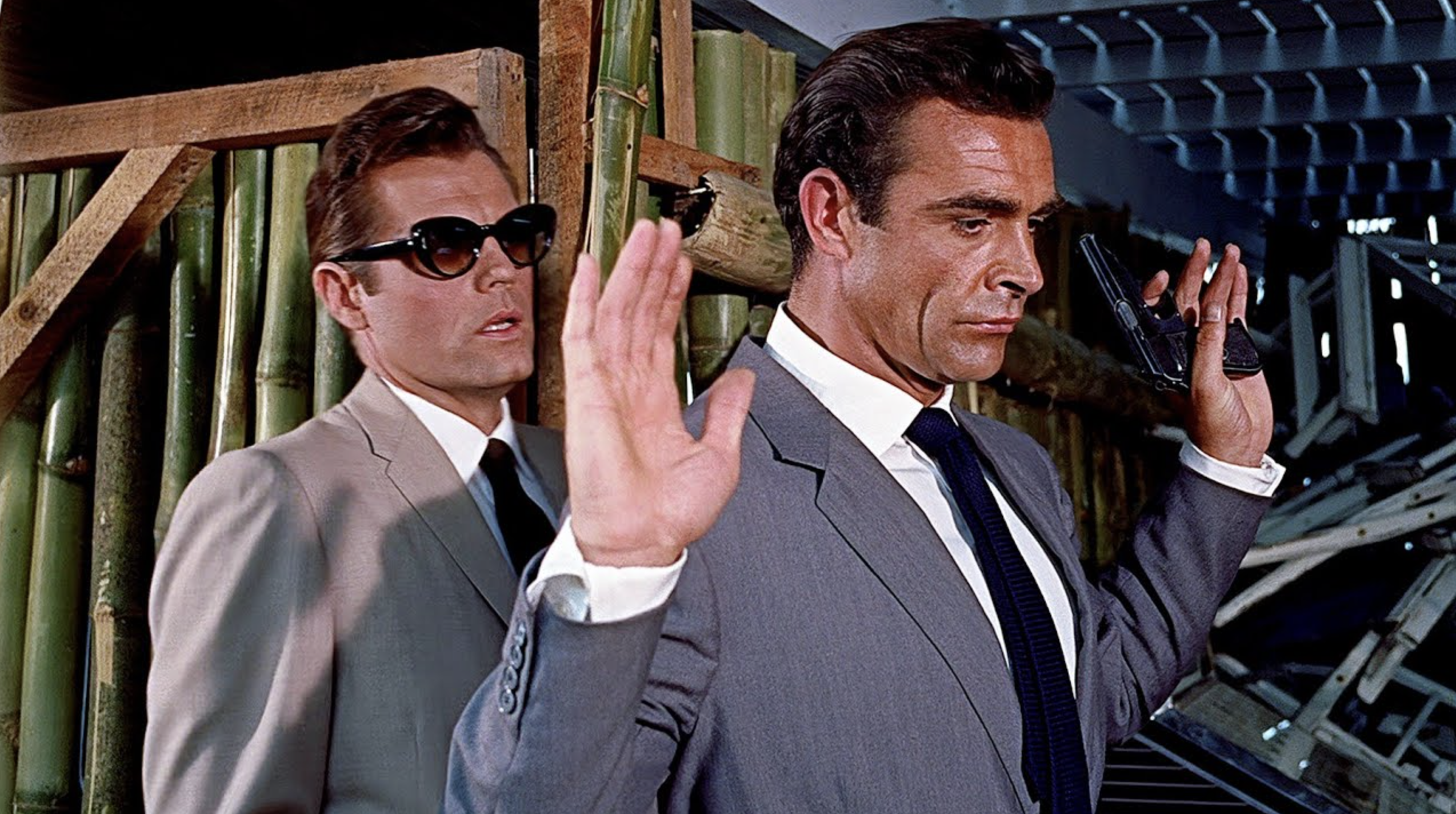
Jack Lord as Felix Leiter in Dr No – EON Productions – Dr No
Ol’ Blue Eyes
Fleming describes Felix Leiter as someone who wears a tan suit like Frank Sinatra, and that all good Americans are from Texas. Jeffrey Wright who plays Felix Leiter in Craig’s run as Bond wears a tan suit in Quantum of Solace, and Jack Lord’s incarnation wears one in Dr No).
Bond and Leiter go back to the hotel, where they are greeted by the concierge.
Bond assumes the concierge has been bought by Le Chiffre, so he gives him some slight disinformation about his health to throw Le Chiffre off later at the tables. Bond is always looking for a small edge, knowing any edge could be the way home in defeating Le Chiffre. Bond then takes Vesper out to the nightclub.
Chapter Fourteen
Bond and Vesper go for dinner.
In the novel, Bond watches Vesper flick a cigarette that doesn’t need to be flicked. He notices these little details because he wants her to relax and enjoy the victory. He’s bloody earned it damn it. In the film, Bond and Vesper are having a good time, and Vesper does seem relaxed. (This was filmed at Grandhotel Pupp in Karlovy Vary which doubled for Hotel Splendide in Montenegro. Pictured below is Anastasia and I in the dining hall at the same table).
Vesper gets called out to talk to Mathis in both the film and the book. In the film, Bond thinks that Mathis has told Le Chiffre that he is onto his “tell” – the twitch he uses to disguise his hand.
In the novel, Bond is suspicious because calling Vesper with a note is out of character for Mathis. He runs outside and Vesper has been kidnapped, with her bag thrown into the bushes.
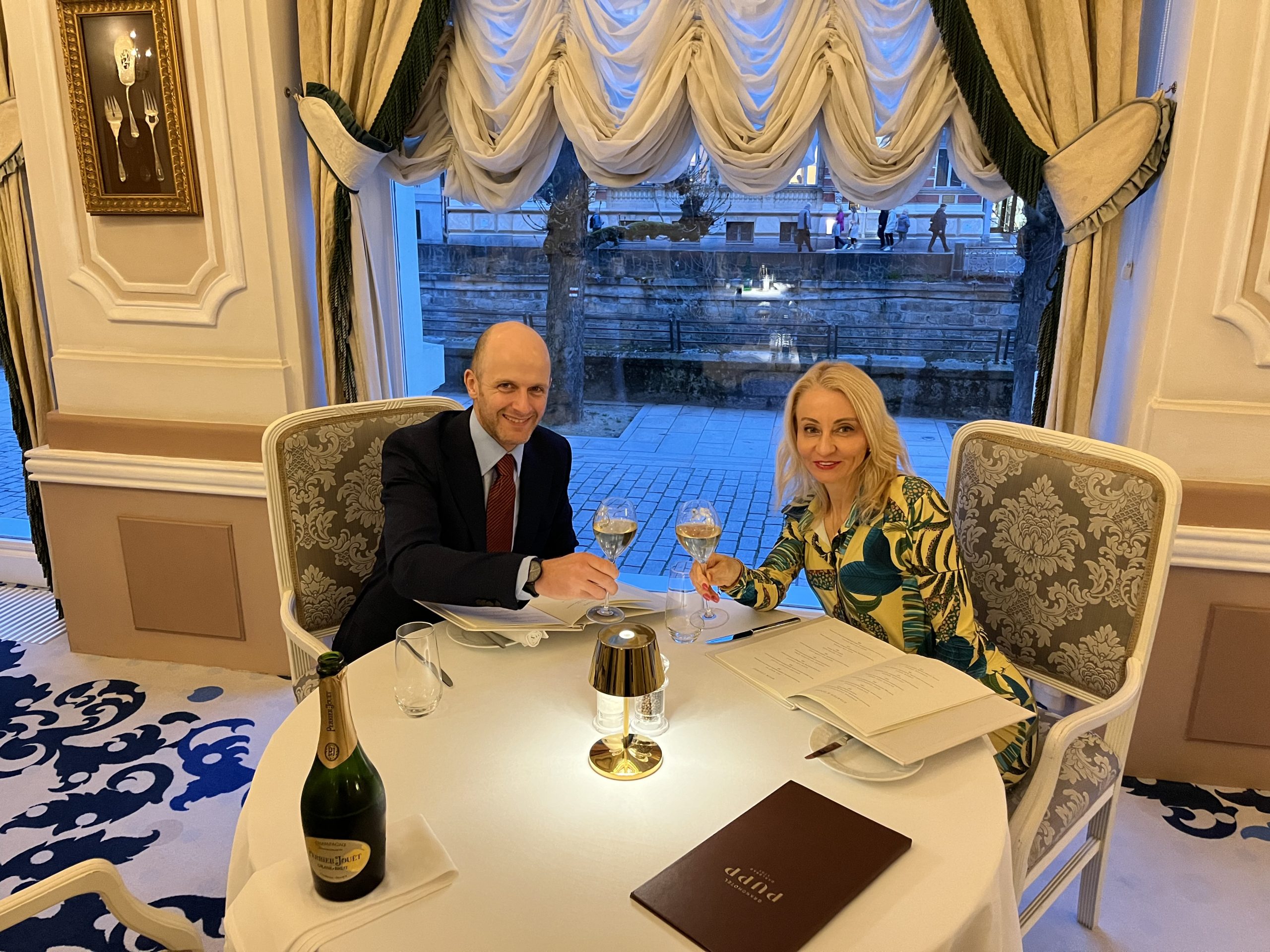
Grandhotel Pupp, the same table Bond and Vesper sat at
Chapter Fifteen
The chase is on.
Bond is in his Amherst Villiers, chasing the Citroën.
Bond has a little thought experiment about the girl and the $40 million cheque. He quickly asserts that he won’t trade and that the girl knew the risks. It’s another insight into his coldness and his focus on the job at hand. Le Chiffre lays a trap in the road for Bond, a chain with spikes. In the film it’s Vesper herself strewn across the road.
It’s hard to separate this scene from the film, although the book plays it out for longer. The car chase in the film was deliberately truncated to surprise the viewer.
“They had the close up on Eva, and they did the car swinging round. And it rolled again. They have it from every angle.” – Daniel Craig.
Chapter Sixteen
Bond crashes. There is no mention of Mathis, as there is in the film when Le Chiffre talks about him.
‘I’m afraid your friend Mathis is really my friend Mathis.’
This is really intended as further misdirection for the audience. Also Le Chiffre is trying to discombobulate Bond further. The description of the crash itself is almost onomatopoeic – lots of crashing, smashing and so on.
But the way the car rears up like a praying mantis is fantastic. Fleming’s metaphors really help you visualise what is happening. Then Bond is taken away by the Corsican, the thin man, who is cruel and economical with his blows.
He overpowers Bond without too much fuss. Bond realises that he knows jujitsu and that he is in their power. They won’t find the car until morning. Bond is done for.
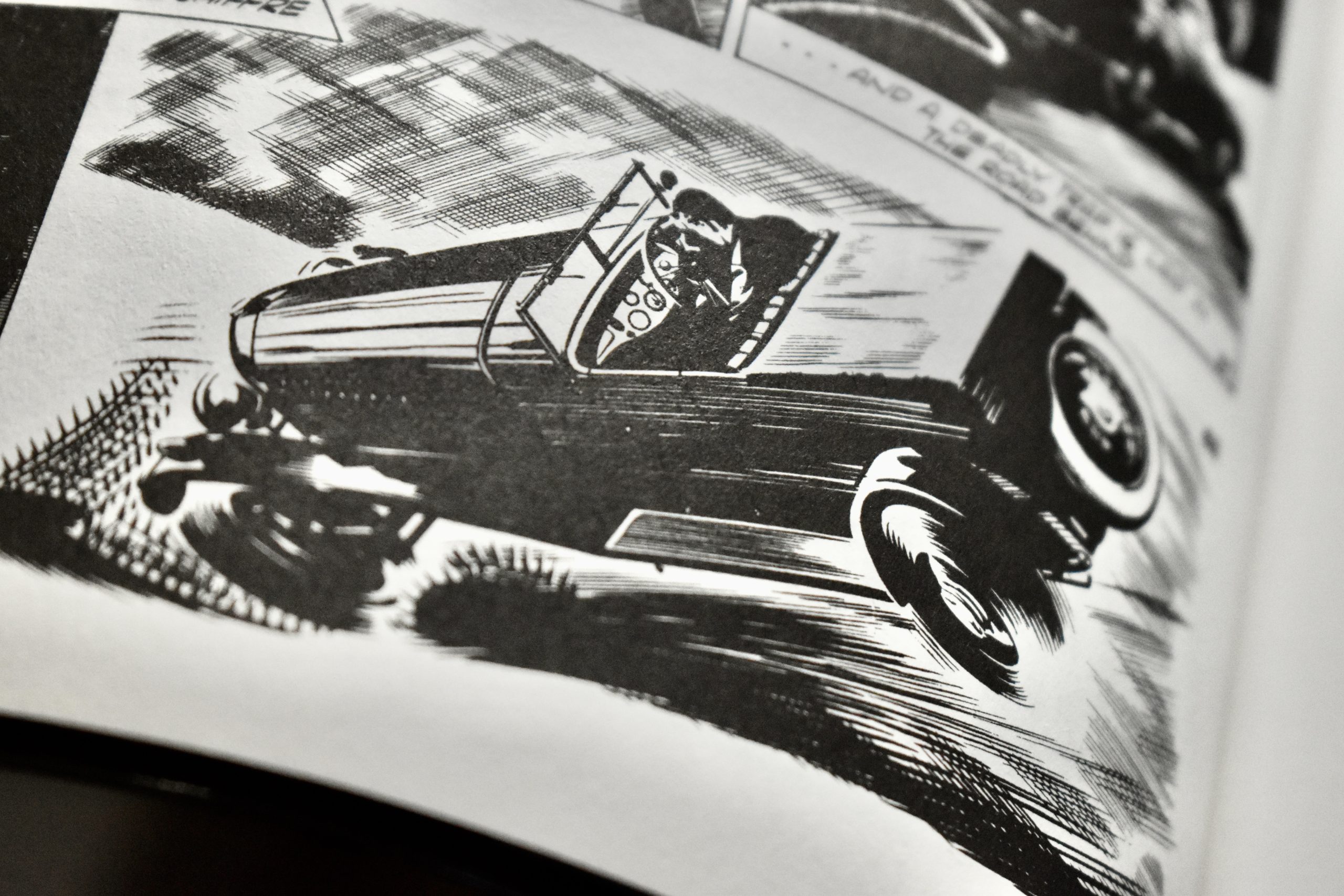
John McClusky’s adaption of Ian Fleming’s Casino Royale
Chapter Seventeen
Just like in the film, Bond is tortured by Le Chiffre by having is private parts beaten through a baseless wicker chair. Only in the book it’s a carpet beater and not an old heavy piece of rope. It’s hard to divorce this scene from the film visually.
But I love some of the lines here from Le Chiffre,
“You’ve stumbled by chance into a game for grown-ups.”
Bond would come to reflect on this line later on. Le Chiffre gets under his skin with lines like, ‘the game of Red Indians is over, quite over’. It’s all the more terrifying because Fleming misdirects the audience. He tells Bond that this isn’t like real life, where the hero gets rescued at the last minute.
Ian Fleming’s Casino Royale
Then there is the sexual twilight of torture and the different stages of knowing what torture involves. ‘A parobola of agony.’ Fleming uses the word parobola twice. It’s an equation, a symmetrical plane curve. In this context Fleming is describing the ascent of the pain to reach the highest point, and then Bond would regain consciousness and the torture would begin again. The pain is cyclical.
There is a little bit about yielding. It isn’t exactly like the film, but Bond is being warned that he needs to yield soon, as his manhood is being destroyed. In the film Le Chiffre asks, ‘will you yield in time?’
Le Chiffre says he has ‘all the time in the world’. A saying so synonymous with the film On Her Majesty’s Secret Service. There is an air of sadism about Le Chiffre, curious to know how long a man can last under this sort of duress.
Ian Fleming’s Casino Royale
Le Chiffre has also covered his basis by explaining to Bond that he had left a note in his room saying that Bond wished for an extra game with Le Chiffre.
Some of the lines Le Chiffre gives here like, “Finished with you, not kill you, finished with you.”
And the chapter’s cliffhanger, ‘Say goodbye to it.’ Like the film, Bond is seconds away from the ultimate dismemberment.
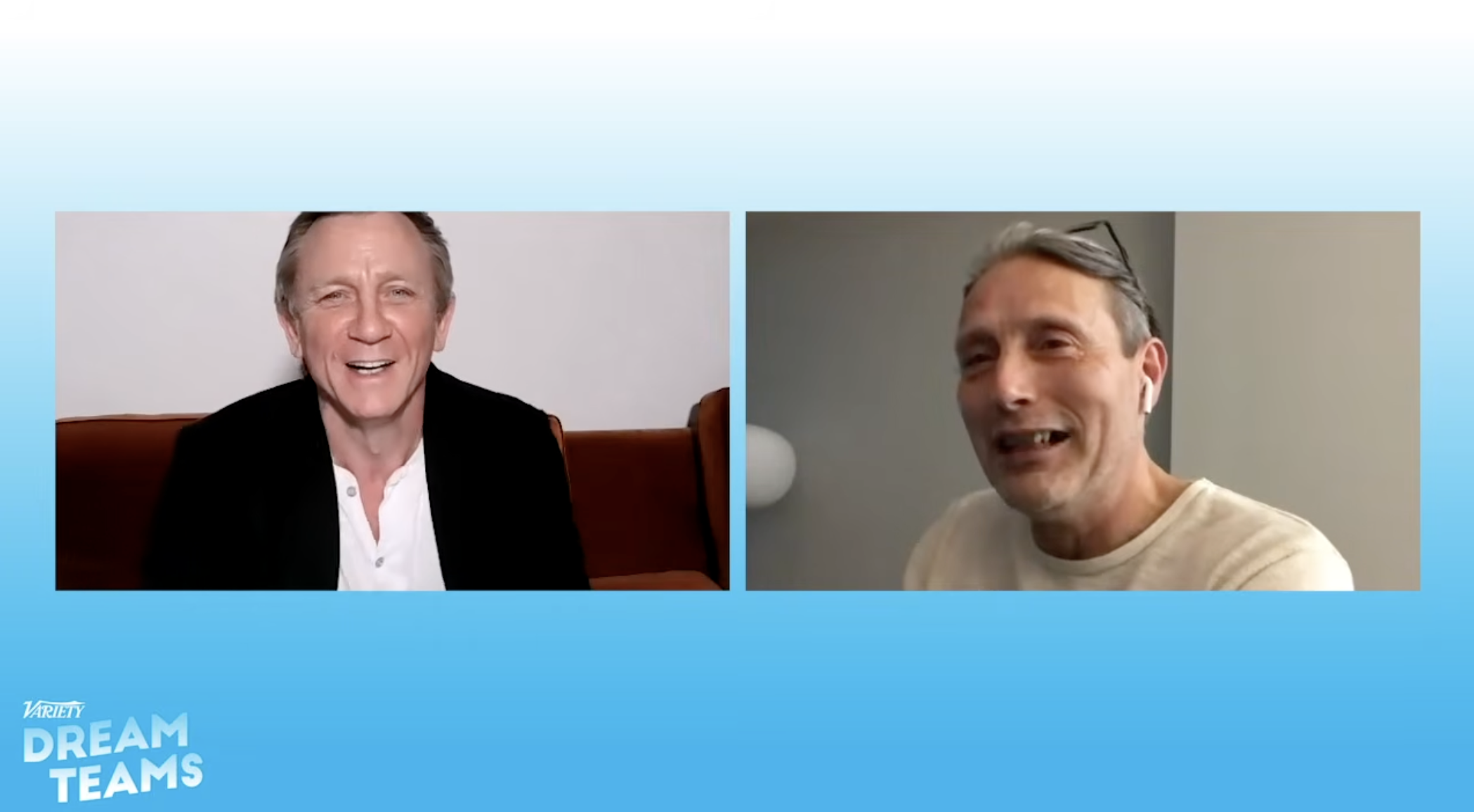
Mads Mikkelsen and Daniel Craig discussed the torture scene for a video on VARIETY and Mads said ‘We didn’t know if they were going to include that scene in the film, it was on the edge for a Bond film.’
Chapter Eighteen
Le Chiffre is intercepted by a member of SMERSH. Just like the film, although he doesn’t beg for his life. He has a quiet acceptance to it all.
Le Chiffre gets shot between the eyes just like the film and we see it through the eyes of Bond. It’s a slow death, and the description captures every nuance: the roll of the outer eyes, the slump of the shoulder and the shudder of the heels. It’s quite graphic, but not glorified. Bond himself is scarred by the SMERSH assassin sent from the Soviet Union.
Above all, I like the description of the silencer’s pop – ‘there was a sharp ‘phut’ no louder than a bubble escaping from a tube of toothpaste.’
I love how Fleming’s metaphors are almost finite. As if there is no other way to describe them. How can you better that? Not everyone knows what a silenced gun sounds like in person, but we all know what toothpaste noises make.
The assassin from Smersh makes an incision into Bond’s hand to mark him as a spy. This is not in the film.
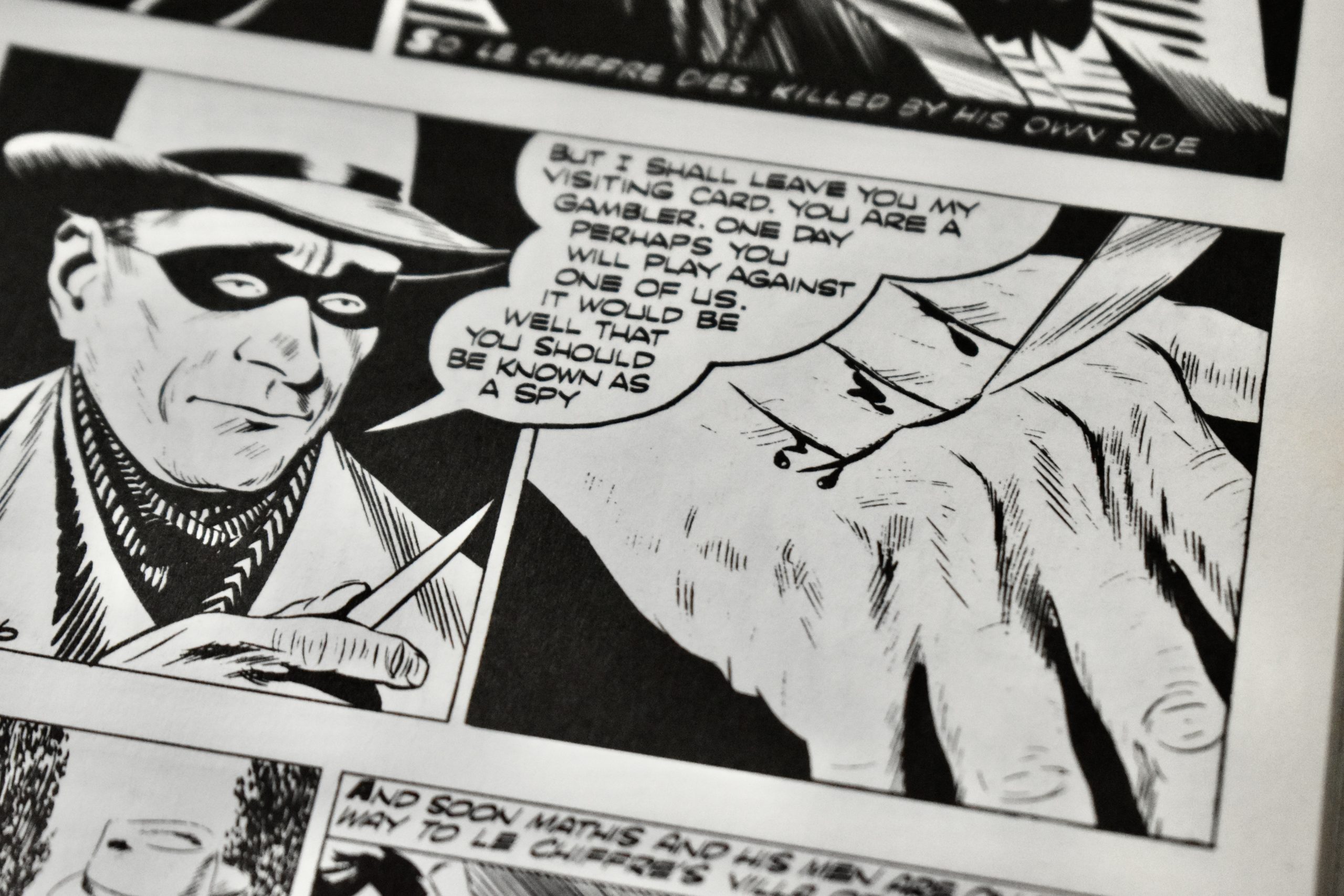 John McClusky’s adaption of Ian Fleming’s Casino Royale[/caption]
Chapter Nineteen
Bond tries to interrogate Vesper about what has happened. She sobs and blames herself. I love how Fleming describes Bond’s delirium as a procession of dream sequences. It’s like he’s an observer to his pain.
“He watched the procession of his dreams go by without any effort to disturb their sequence, although many of them were terrifying and all were painful.”
Mathis is there and, unlike the film, where the sequence is heavily edited, (most parts deleted) Mathis is a pillar of trust here.
Bond even confides in him about where he hides the winnings – the number on the outside of the door of his hotel. Of course we would have to change this for the film as the book was written in 1953 and they didn’t have bank transfers, code encryptions etc. It was all cheques.
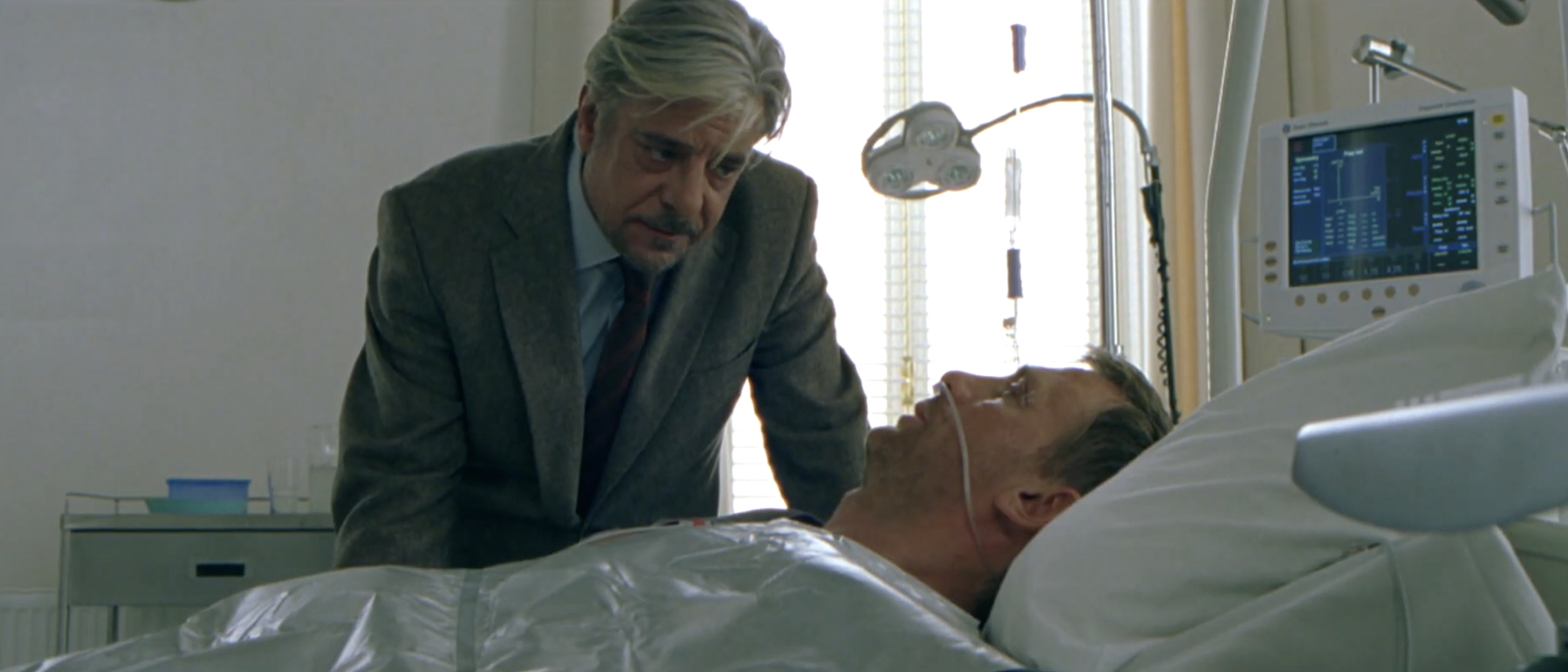 Deleted scene Casino Royale 2006 EON Productions
Chapter Twenty
Bond gets to flex his philosophical muscles when he talks to Mathis about heroes and villains becoming mixed up. This is touched upon in No Time to Die when Bond and Felix muse that it’s hard to tell the good from bad, villains from heroes these days.
Again, in the film, Bond has seen to it that Mathis gets tasered and taken away. There is a real fork in the road with the character here. I think they wanted to misdirect the viewer entirely away from Vesper being the double agent.
Bond talks about why the devil hasn’t got a book about him. Why has no one written about the virtues of evil? And in his head, he is probably wondering whether Good versus Evil is simply a trend.
“If I’d been alive fifty years ago, the brand of conservatism we have today would have been damn near called Communism and we would have been told to go fight that.”
Mathis is a keen listener and is ultimately impressed by the layers to Bond. There is little nuance to Bond in the films, rarely does he go on a soliloquy this long.
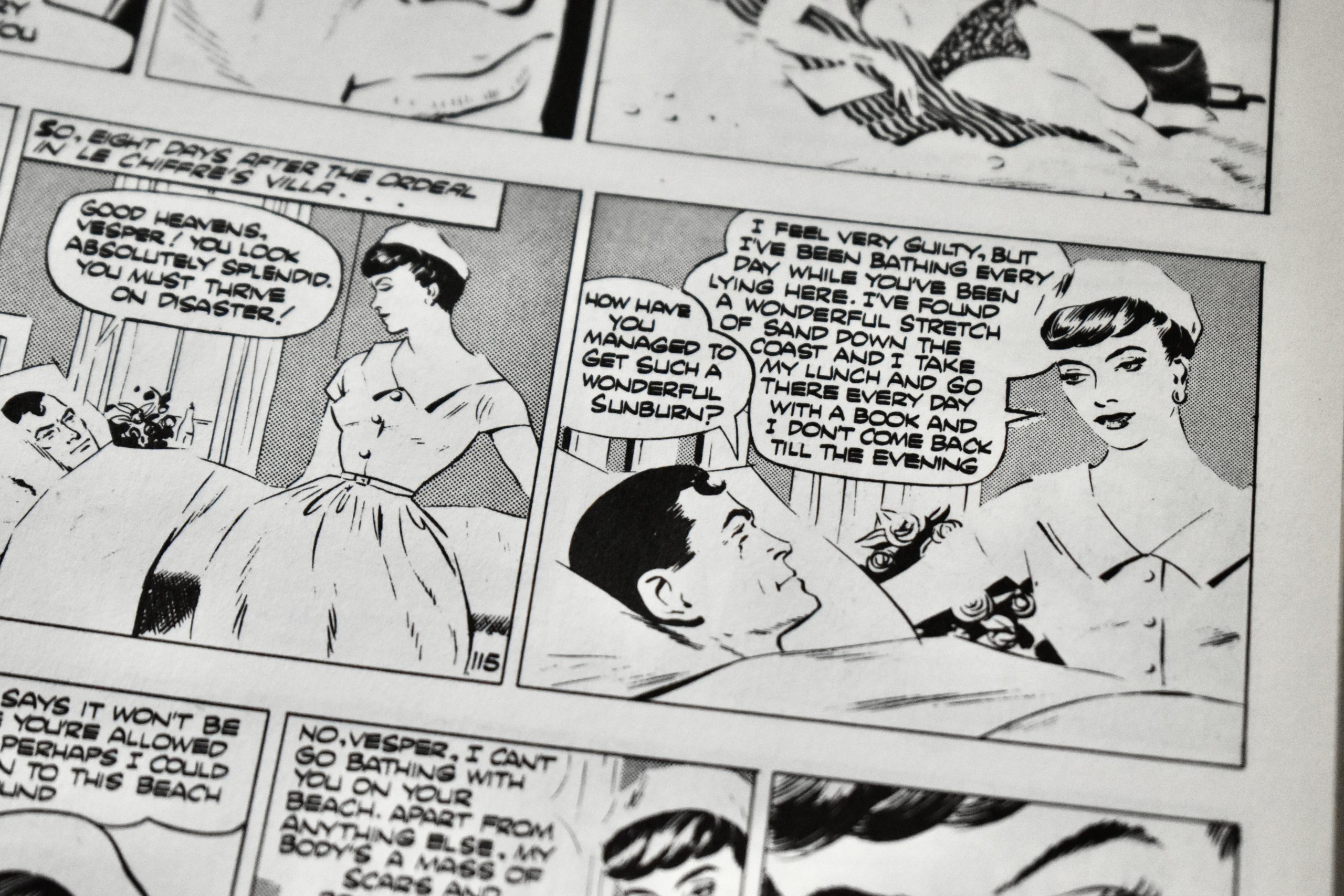 John McClusky’s adaption of Ian Fleming’s Casino Royale
Chapter Twenty-One
Bond gets a visit from Vesper who brings him flowers. He hates flowers, which is interesting as he asks for ‘fresh flowers every day,’ in Licence to Kill.
It’s slightly different from the film. There is no visit from a Mendel. In fact no Mendel character at all. But there is a promise that Bond and Vesper make to each other, that she has to make him feel better.
Chapter Twenty-Two
God, I love the line about “fingering the necklace of the days to come.” Fleming can be quite lyrical at times. It makes me think what could have been with his infamous lost book of poetry, Black Daffodil. They take a road trip to a small lodge, in the film Bond has somehow got a huge yacht into the Venice canal. Vesper is paranoid that she is being followed. Bond calls it bunkum.
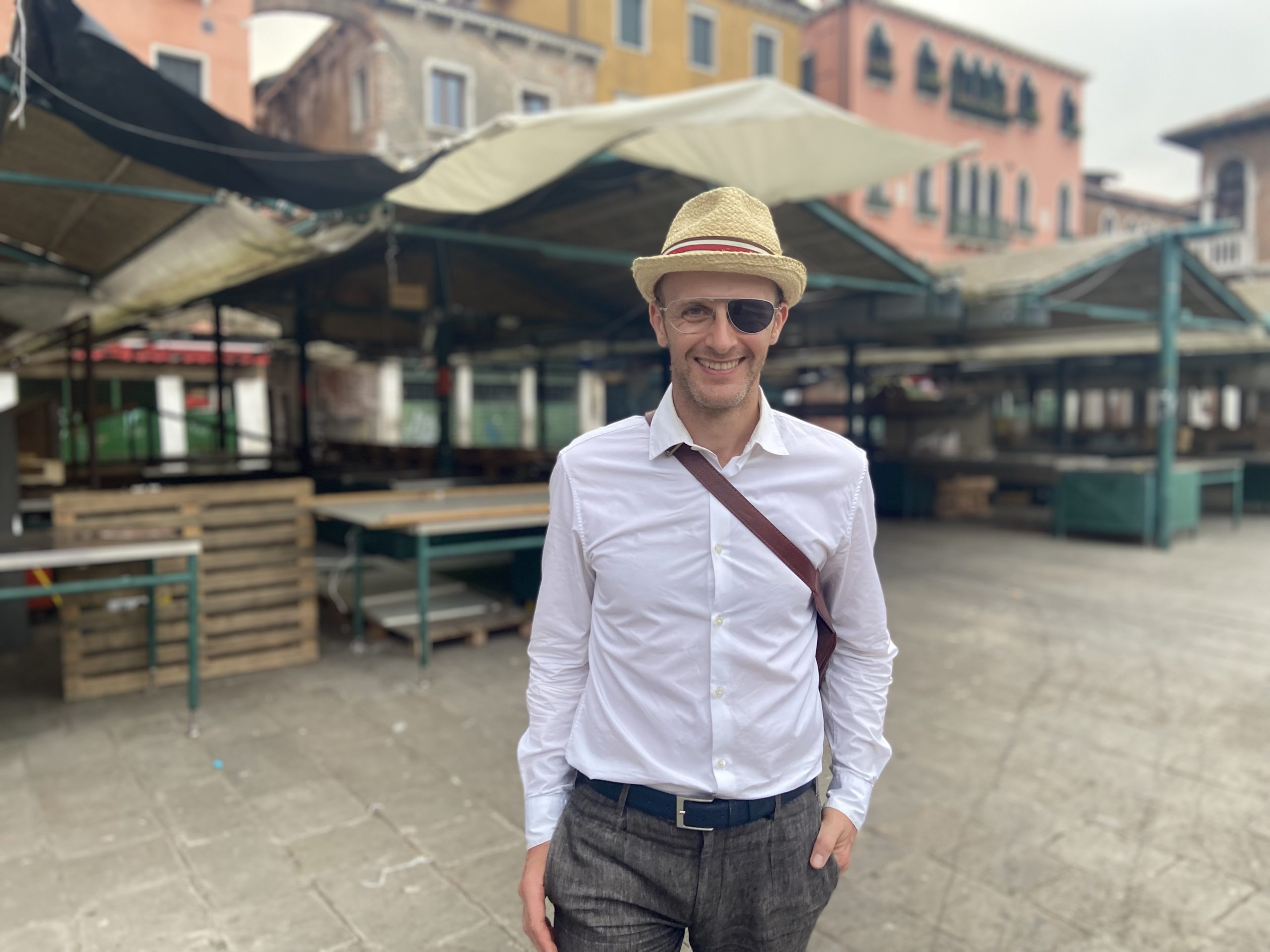 Me at the fish market in the Venice, in the spot where Vesper sees Gettler
There is a slight echo of this in the film when Vesper spots someone from the boat, the fish market. He (Gettler) is wearing an eye patch and it unsettles Vesper. In the book she is petrified. Gettler also wears an eye patch in the book, although screwed in like a monocle.
I like the description of Bond’s ritual: the kiss, the bed, more bed, less bed. It’s as if he has done it a hundred times before. And he can’t see why this would be any different. And I wonder whether, when Fleming describes the crescent beach, is he describing his beach in GoldenEye.
Probably my favourite chapter so far.
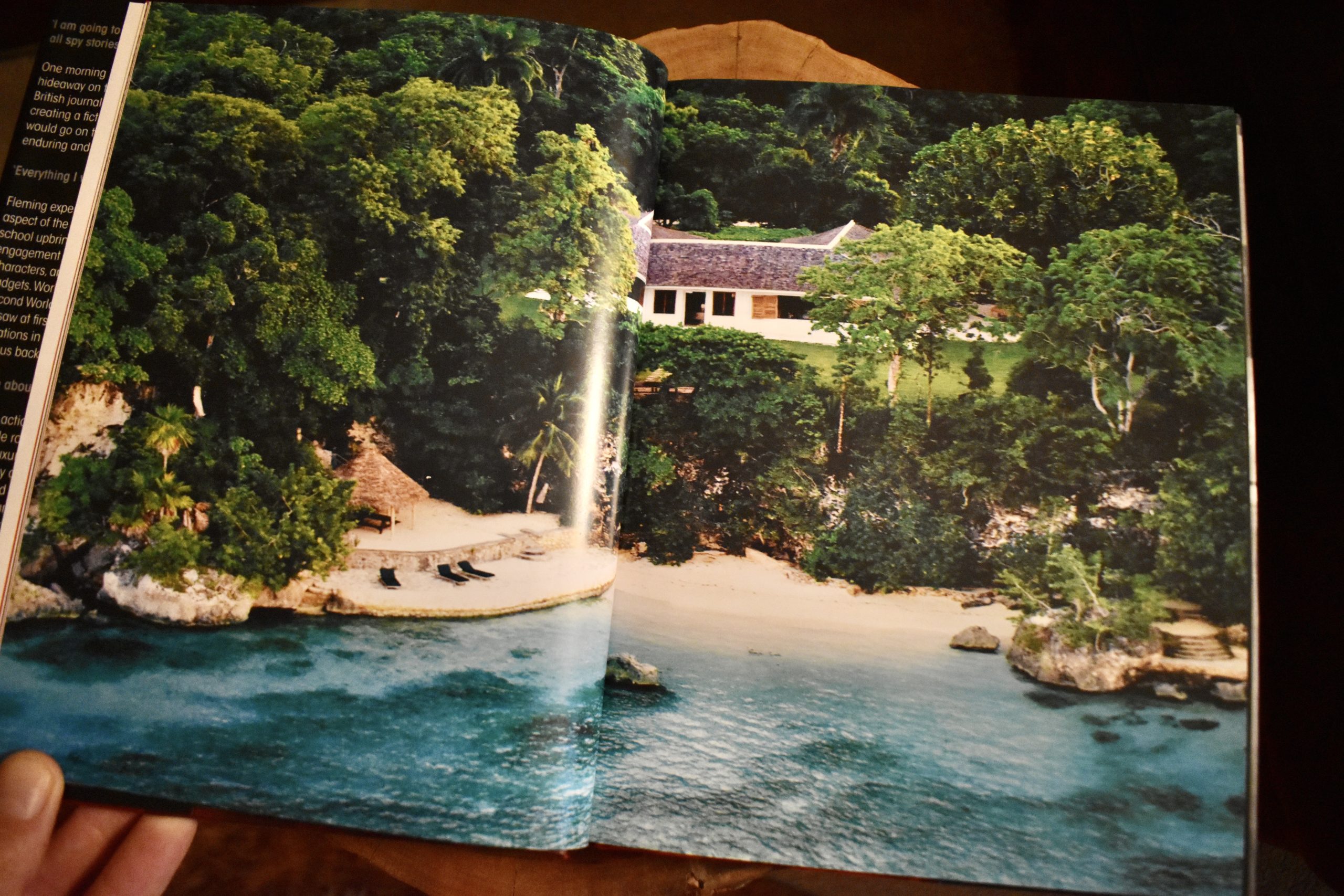
Chapter Twenty-Three
Bond is in the room with Vesper and makes his advances. She is sensual but withdrawn. There is a perfect picture here of Vesper’s inner torment.
Bond refers to this as a private room inside of her which he could never invade. Nice touch with the clothing and the pyjamas here. Again, are we seeing Fleming supplant his predilections onto Bond?
In the film, you never really get a sense of the conflict going on inside Vesper. In fact it’s her that tells Bond that he won’t let her in. ‘You’ve got your armour back now.’ The cinematic audience is completely duped by her double-cross. (Those that are not familiar with the book of course).
Bond swims in the sea and muses that Vesper will always have this vulnerability, and that ‘the conquest of her body, because of the central privacy in her, would each time have the sweet tang of rape’. This is probably the most controversial line in all of the books.
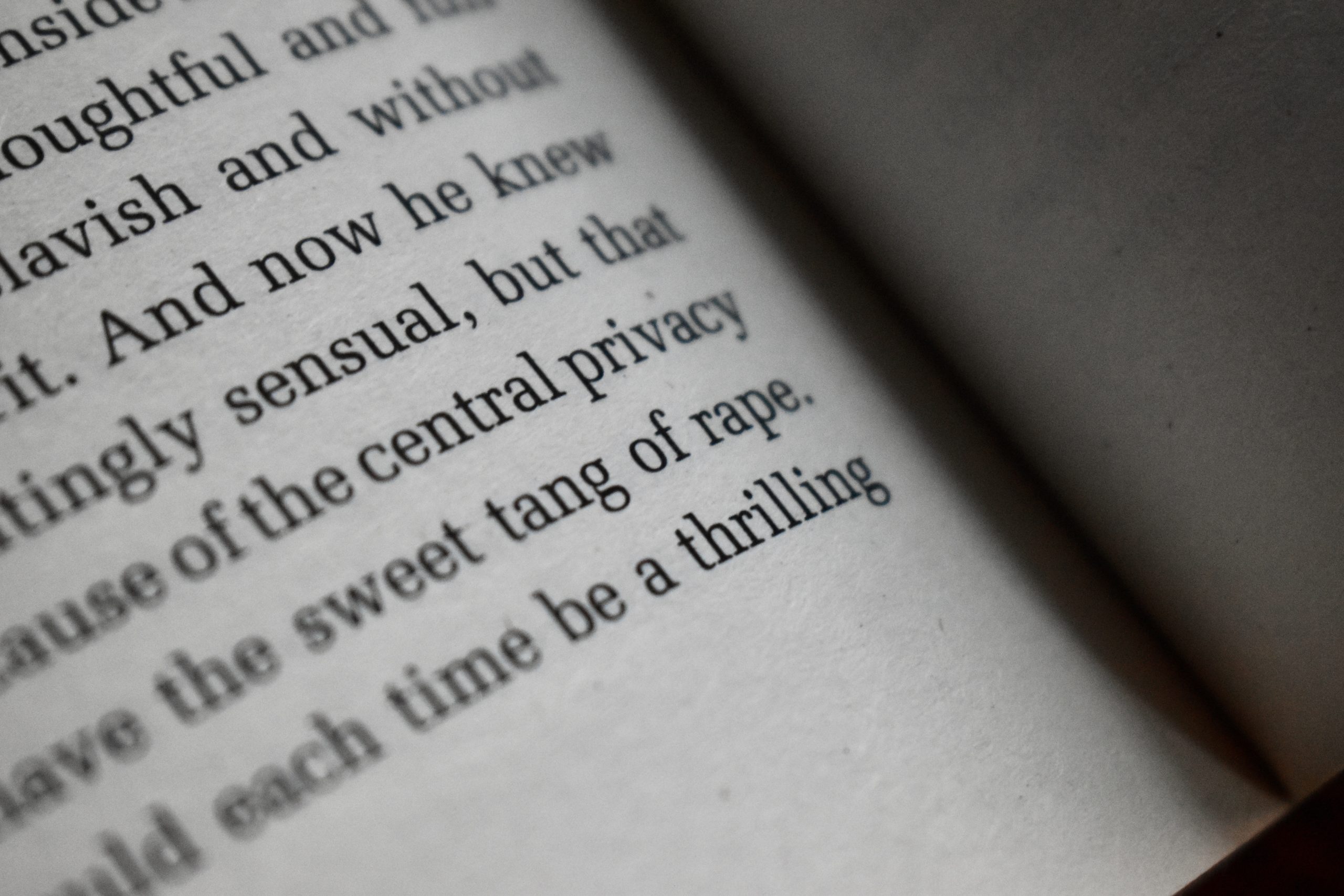 Main controversial line in Ian Fleming’s Casino Royale
Chapter Twenty-Four
Vesper says that people are islands that don’t touch – more distant. Bond wants to make peninsulas. I like that line. There is also more going on with the literary Vesper here than people give her credit for. Most people dismiss Fleming’s depiction as submissive, girly, ‘a secretary.’
But she is a multi dimensional character, that has her own mind. She has been compromised and we are seeing all sides of her torment with her mood swings, her deceit, her detachment from Bond.
We really get a sense of Bond’s isolation when he goes to the sea. He loves the cold and the elements. It’s his place of meditation much like it was Fleming’s in GoldenEye. It’s there that he has come to a decision. He wants to marry Vesper. Bond is quick-minded and knows what he wants.
Chapter Twenty-Five
Vesper is caught on the phone and in a lie.
Bond picks up on this. I love the phrase “the edifice of deceit”.
It frustrates Bond because he cannot get close to her. They start to argue more. None of this is in the film.
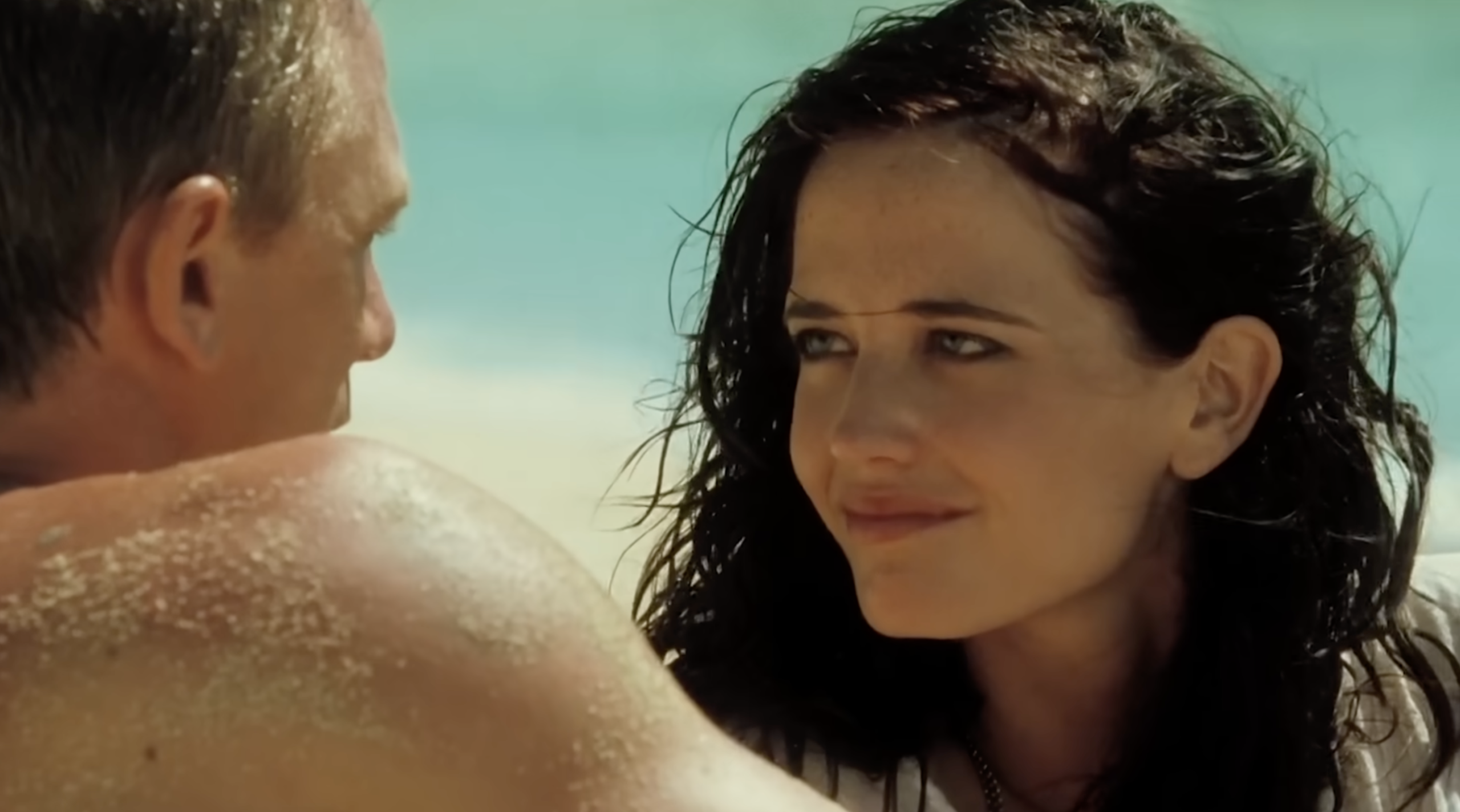
This is where the book veers dramatically away from the film, because Fleming gets to turn the tables on Bond. At first, Bond assumed this was going to be one of those affairs like every other. But he has seen something in Vesper that has pulled him inexorably towards her.
 Casino Royale 2006 EON Productions
And now, the further she gets from his grasp, the more he falls for her. The forbidden fruit, the thrill of the chase. <strong>Bond and Vesper have lunch. She spots the man at another table whom she thinks is the person who followed her in the car.
Bond speaks to the concierge, who confirms his suspicions that Vesper was not on the phone to Mathis, as she had claimed.
Chapter Twenty-Six
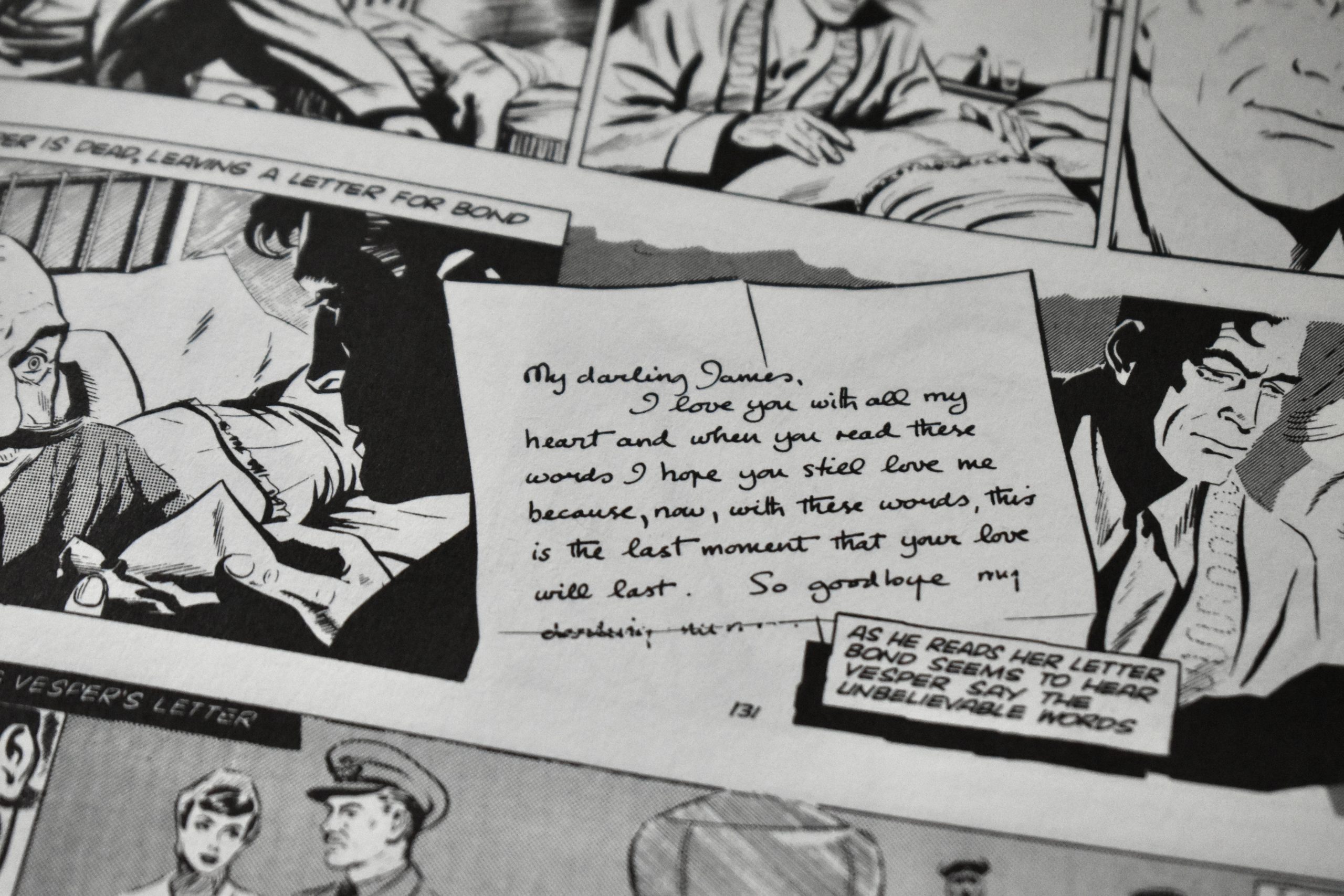
Vesper and Bond have dinner, and she wants to get drunk on champagne. They make love, and Bond feels like this could be the great reset. He wants to go back to the beginning, but she is now totally unreachable. Bond confesses that he was going to ask her to marry him, and she sobs.
He still can’t get a read on her.
Bond wishes her good night before going to a separate room.
 John McClusky’s adaption of Ian Fleming’s Casino Royale
Chapter Twenty-Seven
Vesper has overdosed on sleeping pills.
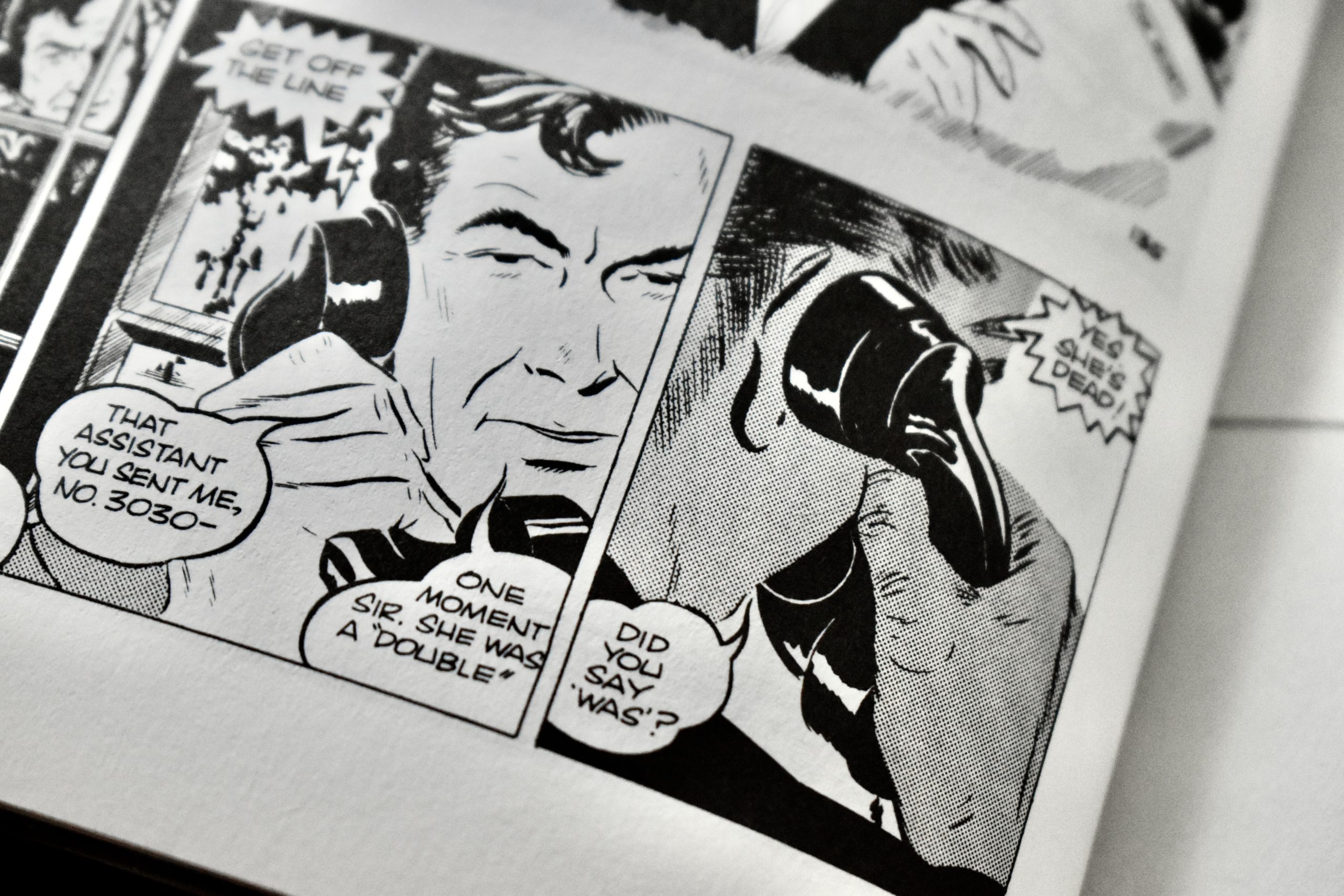
He reads her suicide note.
She explains that she was a double agent working for the MWD a double agent working for the Russians.
I like the way she prefaces the note by explaining how she feels and how much she loves him, while knowing that by the time he finishes reading the letter, his feelings towards her will change.
She was involved from the start, distracting Leiter and Mathis at the casino when Bond had a gun trained on him. She hoped they could outrun them, but they caught up with her.
Her options were to watch them, kill Bond, watch them kill her, or watch them kill both of them. So she killed herself.
 John McClusky’s adaption of Ian Fleming’s Casino Royale
Much like the film, she had a boyfriend who would have been killed by SMERSH if she didn’t follow their orders. In the book we also learn that Vesper’s boyfriend knew nothing of this, and the twist they give in the film Quantum of Solace was that her boyfriend was also a double agent who was using her and others to get secrets.
Bond phones it in:
“The bitch is dead now.”
In the film, he simply says, “The bitch is dead.” In the comic adaption by John McLusky the word ‘bitch’ is omitted entirely.
Bond is given a lead in the film that Vesper leaves behind for him, a number for Mr White who he tracks down at the end and shoots in the leg. In the book, Bond simply makes a solemn oath to himself to take out SMERSH.
EXTRAS
For more on Casino Royale, check out our podcast and notes where we broke down the 2006 film minute by minute.